
Istanbul Sights: Highlights and Tips
- Istanbul lies on two continents: Europe and Asia are separated by the Bosporus.
- You should plan at least 3 to 4 days for the most important sights in Istanbul.
- Hagia Sophia was built as a cathedral in 537.
- The interior of the Blue Mosque is decorated with over 20,000 handmade Iznik tiles.
- The Galata Tower dates back to the 14th century and offers a panoramic view of Istanbul.
Contents of this post10 chapters
- 1Istanbul sights: What should you see?
- 2Hagia Sophia and Blue Mosque in Sultanahmet
- 3Topkapi Palace: Ottoman history in Istanbul
- 4Grand Bazaar and Spice Bazaar: Istanbul with all your senses
- 5Bosphorus: Discover Istanbul from the water
- 6Galata Tower and Beyoğlu: Panorama and district
- 7How many days do you need for Istanbul?
- 8Practical tips for Istanbul's sights
- 9Read more
- 10Frequently Asked Questions
Istanbul sights: What should you see?
Istanbul connects Europe and Asia, separated by the Bosphorus. This metropolis of millions was once known as Constantinople, the capital of the Eastern Roman Empire and later of the Ottoman Empire. This eventful history is particularly evident amidst mosques, palaces, markets, and the shores of the Bosphorus. Many of the classic sights are concentrated in Sultanahmet on the European side. This district is therefore a sensible starting point for your first visit.
For the major highlights, at least three to four days are recommended. This allows time not only for the Hagia Sophia, the Blue Mosque, and Topkapi Palace, but also for the Grand Bazaar, the Galata Tower, and a boat trip on the Bosphorus. The following selection will help you plan your itinerary without including current prices or timetables.
What are the highlights of a first trip to Istanbul?
If it's your first time in the city, six places make a good starting point: Hagia Sophia, the Blue Mosque, Topkapi Palace, the Grand Bazaar, the Bosphorus, and the Galata Tower. They showcase religious architecture, Ottoman history, market life, and the city's unique location from different perspectives. You don't have to arrange them in a rigid order. It's more effective to combine nearby destinations and consciously allow time to soak up the atmosphere between each one.
Hagia Sophia and Blue Mosque in Sultanahmet
Hagia Sophia: A building with changing functions
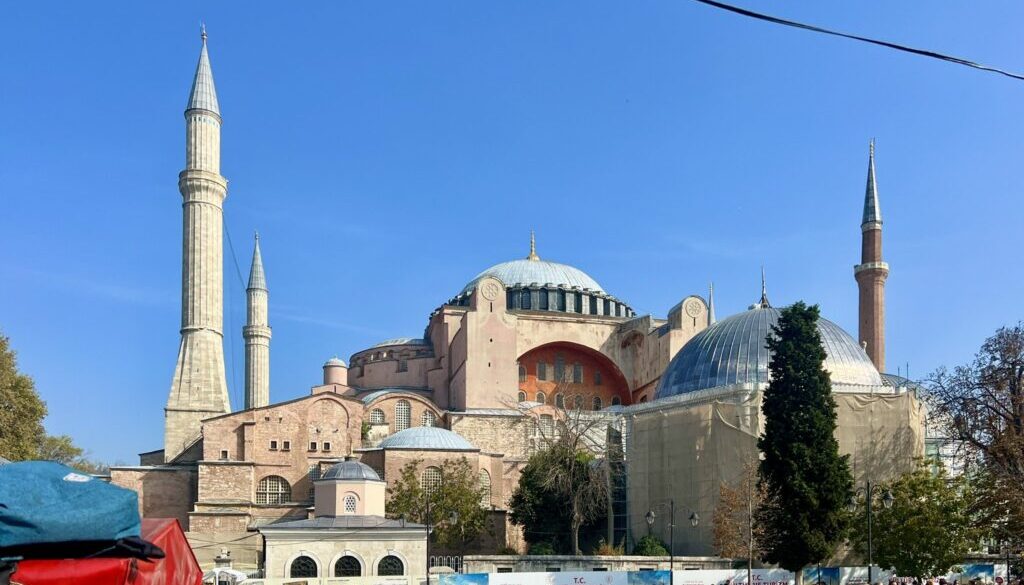
The Hagia Sophia, or Ayasofya in Turkish, is considered a symbol of Istanbul. It was built as a cathedral in 537. After the Ottoman conquest of Constantinople, it was converted into a mosque in 1453. From 1934, the building served as a museum, and since 2020, it has once again been a mosque. This very succession makes the Hagia Sophia a central location for understanding different layers of the city's history.
Since the Hagia Sophia is used as a mosque, you should respect the religious rules: shoes must be removed, shoulders and knees must remain covered, and women must wear a headscarf. Don't plan your visit as just a quick photo stop. The architecture and historical significance are best appreciated if you allow yourself enough time to explore the interior. Since January 15, 2024, foreign visitors have had access to a separate, paid tourist entrance; the upper floor (gallery) is the area open to the public. You should check the current access rules on the official website immediately before your trip.
Blue Mosque: Iznik tiles and six minarets
Directly opposite the Hagia Sophia stands the Blue Mosque, also known as the Sultan Ahmed Mosque. Its striking exterior is dominated by six minarets. Inside, over 20,000 handmade Iznik tiles in shades of blue give the building its famous name. Because of their proximity, both places of worship can easily be visited in the same part of the day without making it a rushed itinerary.
The same rules apply here as for visiting a mosque: cover your shoulders and knees, remove your shoes, and women must wear a headscarf. The Blue Mosque is closed to visitors during daily prayer times. Since specific times vary, checking the current schedule is part of your preparation. Allowing yourself a reasonable amount of extra time will prevent your plans from clashing with the religious activities.
Topkapi Palace: Ottoman history in Istanbul
Why is the palace one of the most important sights?
Topkapi Palace served as the residence of the Ottoman sultans for nearly 400 years. It complements the religious buildings in Sultanahmet by adding a political and courtly perspective to the Ottoman Empire. The complex is not a place for a quick glance. You should allow ample time for the entire palace, ideally half a day.
The Harem section is a particular highlight. Check in advance whether the Harem is included in your ticket and whether any conditions have changed. If you plan to visit the palace on the same day as Hagia Sophia and the Blue Mosque, be realistic: the proximity doesn't replace the time each individual site deserves.
Grand Bazaar and Spice Bazaar: Istanbul with all your senses
What awaits you at the Grand Bazaar?
The Grand Bazaar, Kapalıçarşı, is one of the largest covered markets in the world. Around 4,000 shops characterize the dense network of stalls and walkways. Besides the typical tourist goods, the atmosphere is a major draw. The bazaar is less a single attraction than an entire market district where browsing, comparing, and haggling are all part of the experience.
Tip: Haggling is customary when shopping. Remain friendly, compare offers, and take your time to decide instead of immediately accepting the first price. Nearby is the smaller Egyptian Spice Bazaar, known primarily for spices, tea, and sweets. Both markets can be combined if you don't want to explore every alley of the Grand Bazaar completely.
How do you plan a relaxing visit to a bazaar?
Decide in advance whether you want to shop specifically or primarily soak up the atmosphere. This will help you avoid feeling overwhelmed by the sheer number of shops. As in busy tourist areas, keep a close eye on valuables. Check opening days and rules shortly before your visit.
Bosphorus: Discover Istanbul from the water
Why is a trip on the Bosphorus worthwhile?
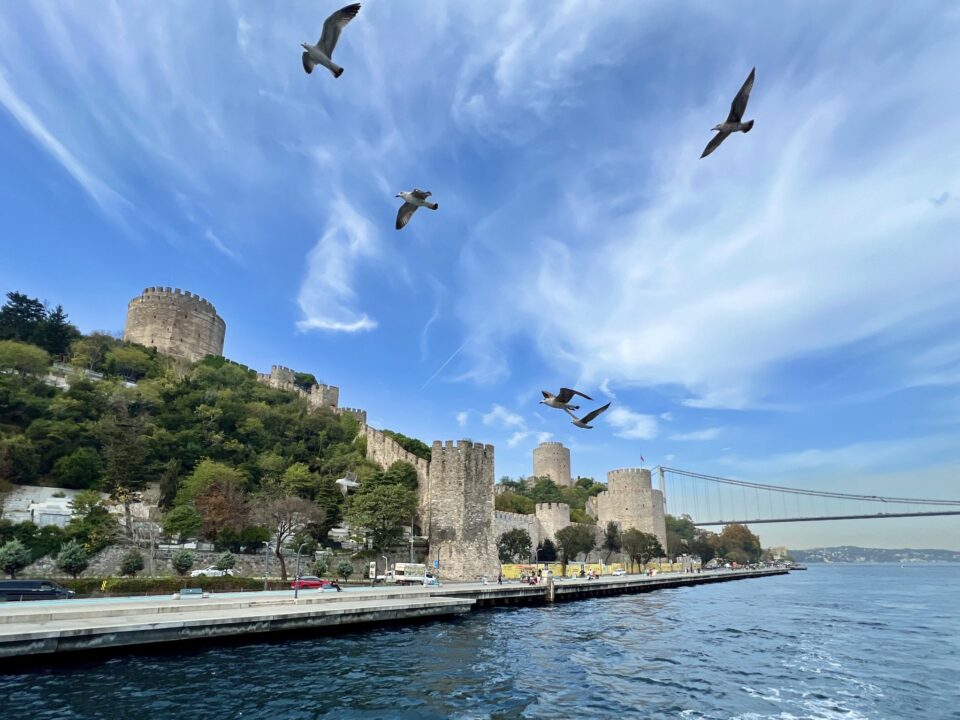
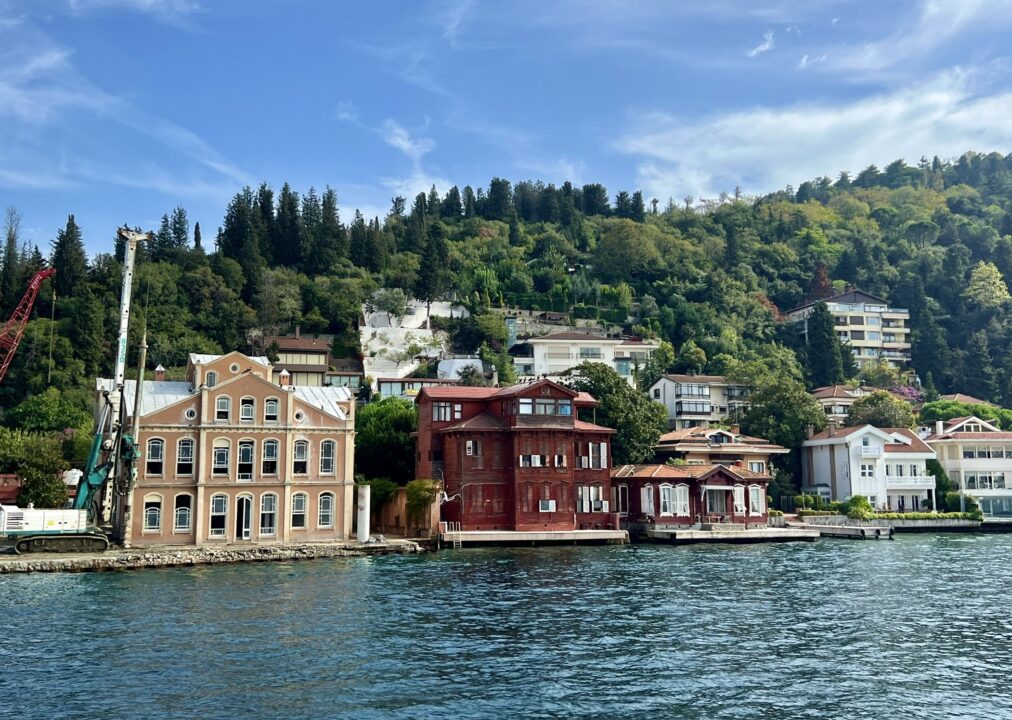
The Bosphorus separates the European and Asian sides of Istanbul, thus defining the city's geography. A boat trip offers views of both shores, Dolmabahçe Palace, and the Rumeli Hisarı Fortress. Palaces along the waterfront also become visible from the water. Therefore, the trip is not just a break from sightseeing, but a unique perspective on the city.
Eminönü is a good starting point. In addition to tourist boats, official city ferries operate. Tip: Check the current routes and timetables of the regular ferries before booking a tour. One possible round trip goes from the Golden Horn along both coasts to the second Bosphorus Bridge. You should verify whether this specific route is offered during your stay.
Galata Tower and Beyoğlu: Panorama and district
Galata Tower: View over Istanbul
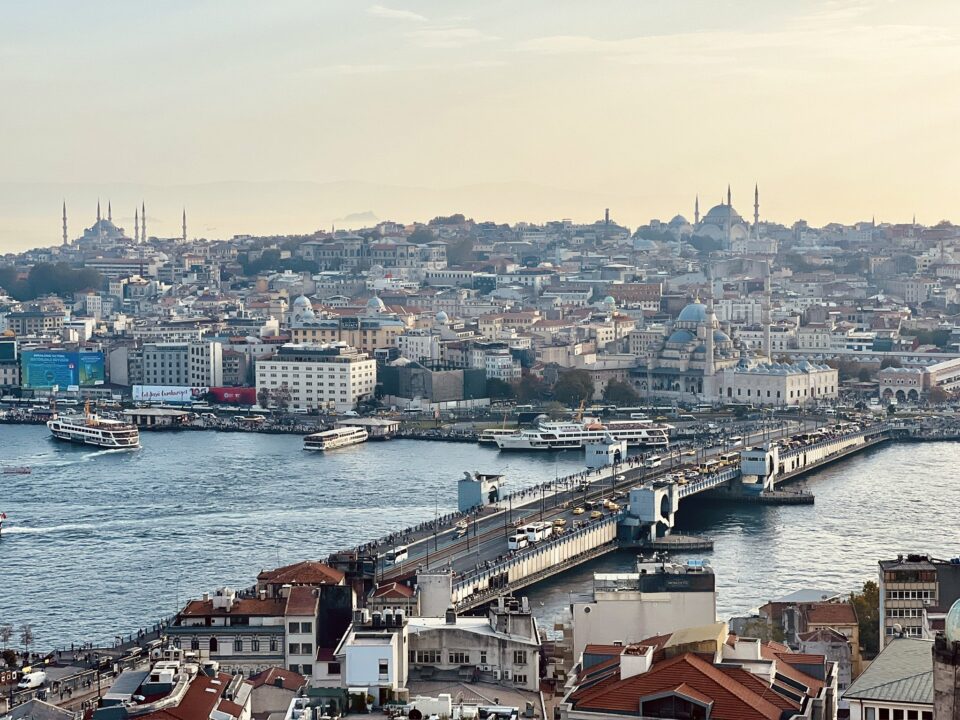
The 67-meter-high Galata Tower dates back to the 14th century. From the top, it offers a 360-degree view of Istanbul. This makes it ideal for getting a sense of the city's size and its waterfront location. The view is particularly worthwhile at sunset, but long queues can form at the tower. Check in advance whether a reservation is possible or required.
Sultanahmet or Beyoğlu as a starting point?
Sultanahmet is convenient if you want to be within walking distance of the classic sights, but it feels more touristy. Beyoğlu and the Galata district are more lively and closer to the nightlife. Therefore, your decision depends less on a generally "best" location and more on your priorities: short distances to historical monuments or a more vibrant neighborhood around your accommodation.
You can combine both sides of the itinerary: Sultanahmet for the grand historical buildings, and Galata and Beyoğlu for a different cityscape. Don't see the Bosphorus and the Golden Horn as obstacles, but rather as part of the experience. Ferries, trams, and the metro are all part of the public transportation system; you should check current tickets, fares, and connections with the relevant authorities.
How many days do you need for Istanbul?
A suggestion for 3 to 4 days
For a first visit, at least three to four days are recommended for the central sights of Istanbul. On the first day, you can focus on Sultanahmet with the Hagia Sophia and the Blue Mosque. The second day is ideal for the extensive Topkapi Palace. The Grand Bazaar and Spice Bazaar can be visited as a separate focus or as an addition, as long as you allow enough time for exploration.
For another day, a boat trip on the Bosphorus, as well as the Galata Tower and Galata district, are good options. Four days allows more flexibility to account for waiting times, prayer times, or changes in access rules. This itinerary isn't a rigid schedule. It's designed to prevent you from simply ticking off the main sights and can be adjusted based on weather and current conditions.
Practical tips for Istanbul's sights
Be respectful in mosques
For mosques: Cover your shoulders and knees, remove your shoes, and women should wear a headscarf. Also, observe the prayer times. These basic rules are more important than a tightly scheduled day. Outside of mosques, there is no general dress code. However, respectful behavior should be a given in religious places.
Best time to travel and current information
In Istanbul, average daily high temperatures range from approximately 17 to 21 degrees Celsius in April and May, around 28 degrees in July and August, and from about 19 to 26 degrees in September and October. Winters remain cool, with average temperatures of around 8 to 10 degrees. These figures are not a substitute for an up-to-date weather forecast.
Some practical details can change quickly. These include entrance fees, opening hours, reservation systems, prayer times, ferry schedules, and rules for individual buildings. Check them with official sources shortly before your visit. This will keep your itinerary flexible and prevent you from relying on outdated information.
Read more
Frequently Asked Questions
What are the most important sights in Istanbul?
Key highlights include Hagia Sophia, the Blue Mosque, Topkapi Palace, the Grand Bazaar, a Bosphorus cruise, and the Galata Tower. Many historical sites are located in Sultanahmet.
How many days should I plan for Istanbul?
At least three to four days are recommended. This allows you to spread your visits to the major historical buildings, the bazaars, the Bosphorus, and Galata over several days.
What are the rules when visiting a mosque?
Shoulders and knees should be covered, shoes must be removed, and women must wear a headscarf. The Blue Mosque is closed to visitors during prayer times.
Is a trip to the Bosphorus worthwhile?
Yes. From the water you can see both coasts, palaces, Dolmabahçe Palace, and Rumeli Hisarı. Check the current routes of the official city ferries locally.
Which district is suitable as a starting point?
Sultanahmet offers easy access to many classic sights, but is more touristy. Beyoğlu and Galata are more lively and closer to the nightlife.
“Life is too short for ‘someday’.”
Janet Dannehl
Ready for your next campaign?
For the past eight years, I've worked with tourism boards, hotels, and premium brands—authentically, personally, and effectively. Combined with Max Haase, we reach over 6 million people.


 German
 English