
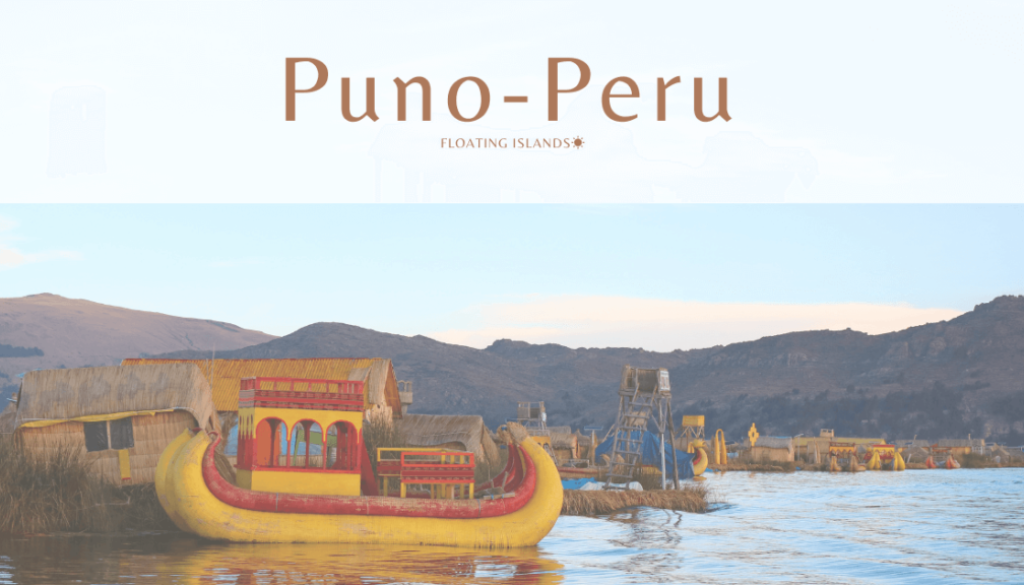
Puno & Lake Titicaca — Peru Travelogue
- Bus to Puno: 8 hours, without air conditioning and fully occupied
- Uros Floating Islands: floating islands made of Tortora reeds
- It is possible to spend the night on a floating island.
- Kayaking and canoeing are included.
The first day of the new year
Once again, we dared to board a bus that should transport us to Puno for 8 hours. Once again, we regretted it. The bus felt like it was 50 degrees Celsius inside, and without air conditioning, it was quite uncomfortable. Additionally, every single seat was occupied, and it felt like everyone was breathing too much. Fortunately, after a few hours, we managed to secure seats in the lower compartment of the bus where the temperatures were more bearable. So, this is how we started the new year. In a stuffy, shaky bus, haha.
But not too bad, because we were on our way to our next adventure!

Uros Floating Islands
Once we arrived, we hopped on a boat to visit the so-called "Uros Floating Islands." Uros Floating Iceland ".
It's a very impressive group of islands floating on the water, built from totora reeds.
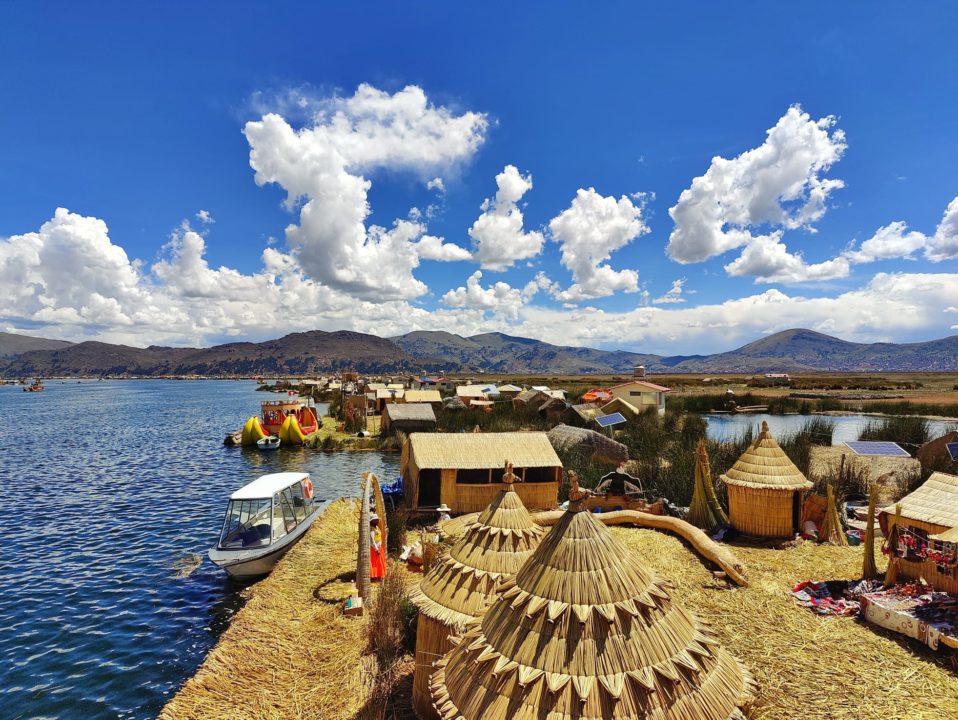
Fascinating! Many families live here right in the middle of Lake Titicaca.
A local explained to us briefly how it all works. Apparently, the reeds have a very thick root that floats on the water's surface. If you connect several pieces of roots together, they grow together after a few years. Then, reeds are laid out in a cross shape on the ground, and voila! You have the foundation to build a shelter.

It's somehow completely unimaginable: a "floating" home on the water. But for the families here, it's completely normal.
The fact is: We have to try this.
"Sleeping on a floating island in the middle of the famous Lake Titicaca once!"


An incredible panorama unfolded. Pure tranquility and fabulous sunsets.
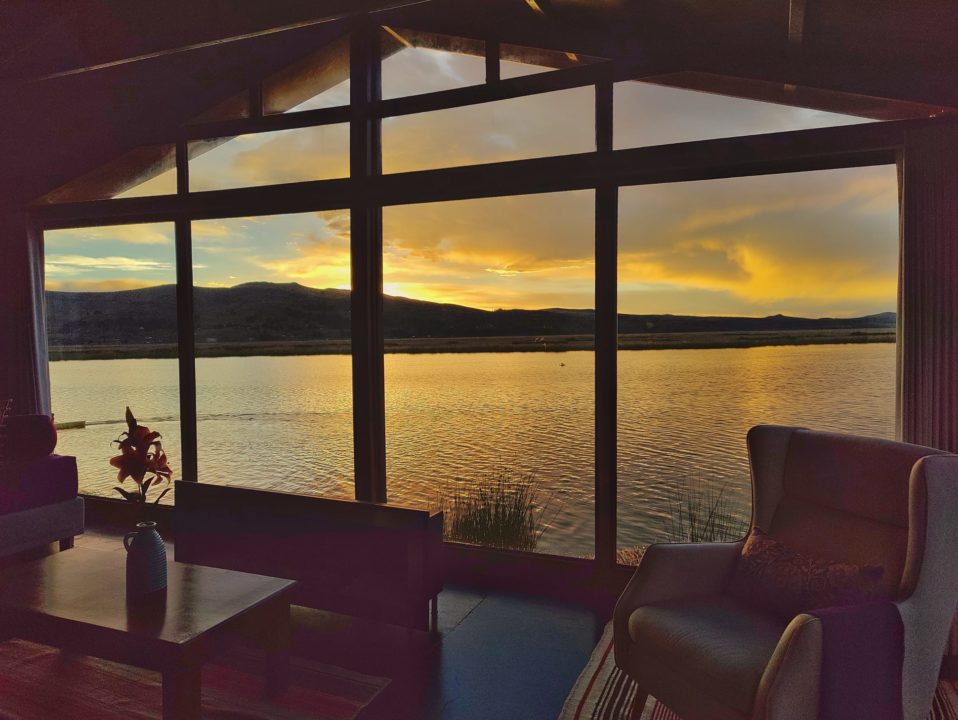
Of course, kayaking and canoeing were also part of the experience!
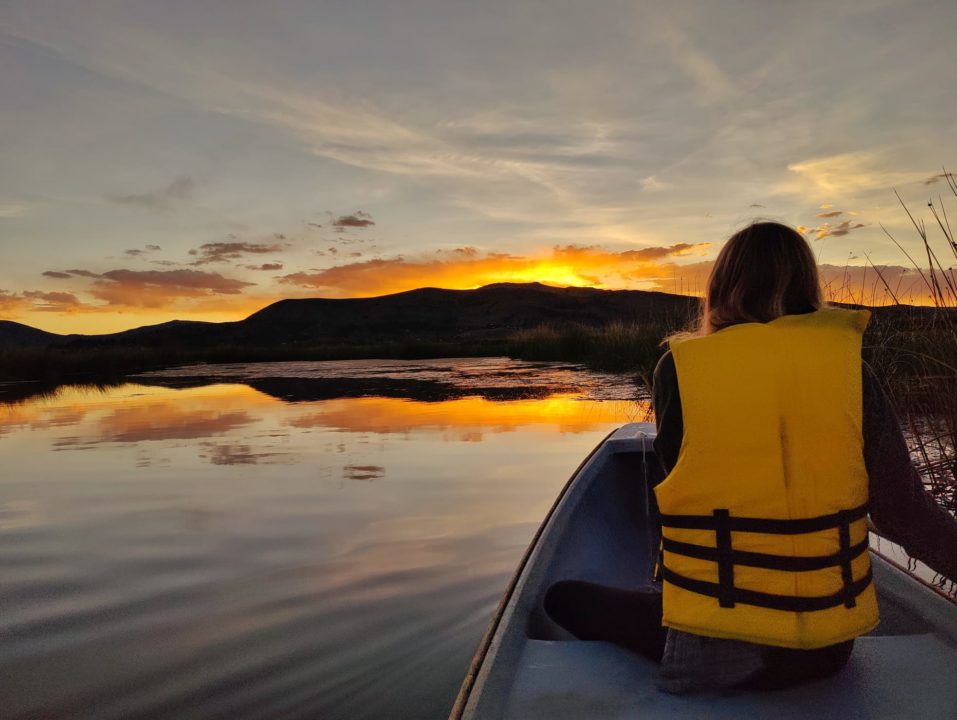
The traditional boats are filled with collected plastic bottles so they don't lose their buoyancy.
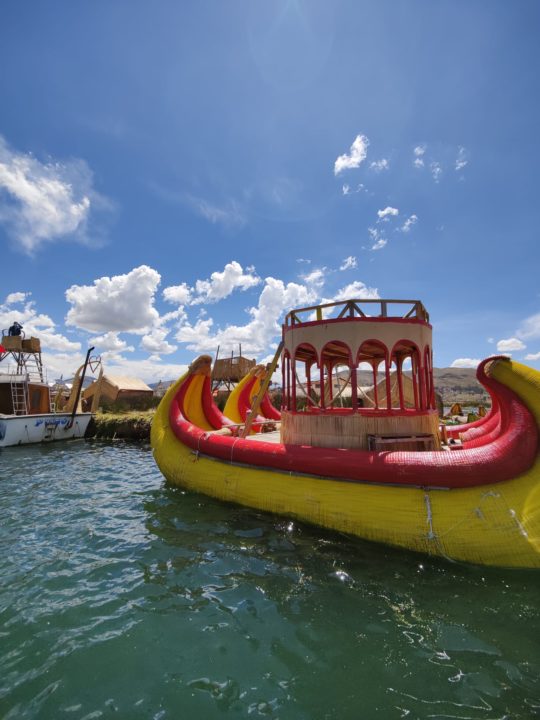
But, like almost everywhere in the world, not everything is perfect here either.
Due to COVID-19, tourism has almost completely dried up, which used to finance the lives of the locals. As a result, many families have to move to the city to find work. There is also a school on the floating islands, which has been closed for months due to COVID-19. No education for the children... Even in the city, schools remain closed!
Next stop: Arequipa
Frequently Asked Questions
How long does the bus ride to Puno take?
Eight hours. It felt like 50 degrees in our bus, every seat was occupied and there was no air conditioning — it only became more bearable in the lower compartment.
How are the floating islands constructed?
Made from Tortora reeds. The root is very thick and floats on the water; if several pieces of root are joined together, they grow together after a few years. Reeds are then laid crosswise on top – this forms the base for the huts.
Is it possible to stay overnight on the Uros Islands?
Yes, that's exactly what we did. An incredible panorama unfolded before us, along with peace and quiet and fabulous sunsets.
Read more
Ready for your next campaign?
For the past eight years, I've worked with tourism boards, hotels, and premium brands—authentically, personally, and effectively. Combined with Max Haase, we reach over 6 million people.

 German
  English