Gold Museum in Bogotá: just under 3 euros per person (November 2022)
Cerro de Monserrate: 3,152 meters — 2 hours of hiking or cable car for around 5 euros
Cartagena's old town has been 1984 UNESCO World Heritage Site, the fortress of 1536
Aviario Nacional de Colombia: 7 euros per person — my highlight in Colombia
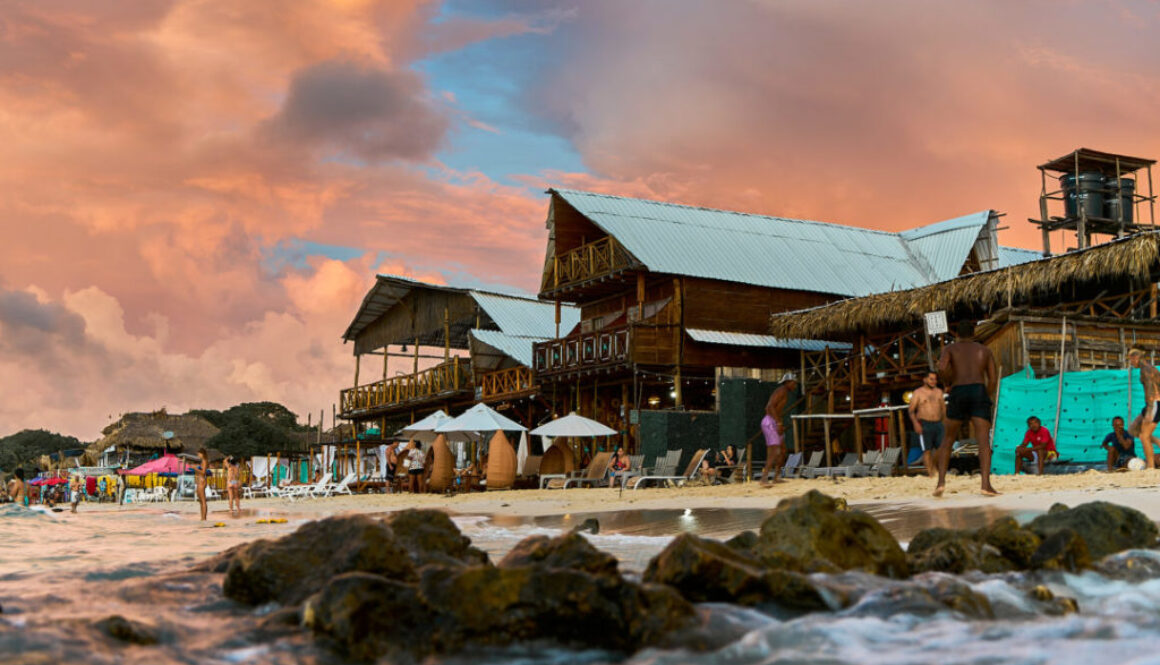
Playa Blanca is located around 1 hour from the center of Cartagena, the last few meters on foot
A week through Colombia 🌴
My 🔝 visited places!
Bogota📍
Plaza de Bolívar
The Place of 1000 Pigeons 🕊️
Surrounded by beautiful buildings such as the Palacio Liévano, the National Capitol and the Cathedral Primada,
is the central square " Plaza de Bolívar“. In the middle of the square, hundreds of doves gather, and occasionally, an alpaca crosses their path 😃. For a small fee, you can buy dried corn here to feed the doves or take a photo with an alpaca 📸. In the past, the square served as a bullfighting arena and public market square.
Take a sip ☕️ + 🧀
,'Chocolate caliente with queso'
A hot chocolate with cheese might sound a bit strange to some 🤔. At first, I was almost certain that this combination couldn't taste good 😆! It somehow reminded me of people who used to eat cheese sandwiches with Nutella. Weird people. But like in any other country, I wanted to try the "delicacies" of the land 😌. When the infamous drink finally arrived, we had no idea how to drink it ☕️. Bite the cheese first, then take a sip of the hot chocolate.
! ❌ WRONG ❌ !
The cheese must be added directly to the cup so that it can melt with the hot chocolate 🤓.Admittedly, the taste of the traditional "Chocolate con queso" is a bit strange at first, but afterwards, it's somehow tasty. 😋
Conclusion: I would buy it again. ☑
La Candelaria 🧑🏻🎨
The Old Town of Bogotá
Just let yourself be carried away by the fascinating streets and admire the colorful colonial houses, the numerous sights, and charming cafes and restaurants. Don't miss out on the graffiti and urban art either! 🎨
Santuario Nuestra Señora del Carmen 🔔
This impressive Catholic church dates back to the 20th century. Its striped color makes it so extraordinary. 😯
Due to the narrow streets, it's not so easy to get a good picture of this landmark 😂. When we arrived, it was very rainy, so we didn't stay long. Still, it was worth a short visit 😉.
CopyTranslate
CopyTranslate
Museo del Oro 🏅
The Gold Museum
In this museum, you'll find plenty of information about indigenous peoples and a detailed history of gold, silver, and copper mining. The entry fee was just under 3 euros per person in November 2022.
Places we unfortunately missed:
Mount Monserrate
Due to time constraints, we didn't manage to visit Cerro de Monserrate. The mountain is 3,152 meters high and located in the Santa district.On-site, you have two options:
either lace up your hiking boots and take the 2-hour hiking route, or hop on the cable car for around 5 euros per person. The view is said to offer a spectacular vista over Bogota and part of the Andes. It's a shame we couldn't see that!
Cartagena📍
The Old Town
Of course, you shouldn't miss the colonial Old Town of Cartagena 😊. In 1984, the historic city center was declared a UNESCO World Heritage Site and remains a sought-after destination to this day. You can either stroll through the labyrinth of streets on foot or even explore the city in a horse-drawn carriage 🐴. There are countless shopping opportunities available, and especially in the evening, it's lovely to sip a cocktail on one of the many hotel decks. 😍
CopyTranslate
Especially in the evening, the Old Town exudes its own charm. ✨
San Felipe de Barajas ⛫
The fortress of Cartagena
The fortress Castillo San Felipe de Barajas, built in 1536, is located on the hill of San Lázaro. The highest point of the fortress can be reached in just a few minutes on foot. Along the way, there are small, dark underpasses that add excitement to the excursion. 👻 Especially at sunset, the view from above is truly impressive! 🌆
Get Semani 🧑🏻🎨
the colorful hippie neighborhood
A perfect place to buy a beer and stroll through the crazy streets 🤩. Everywhere, there are vibrant colors, hanging flags, artworks, and chalk-painted paths. For me, one of the most beautiful places in Cartagena! 📸
But it's not just the houses and streets that amaze you, but also the people and the talking parrot! 🦜
Playa Blanca 🏝️
the little paradise
Just about 1 hour away from the city center of Cartagena, you'll find Playa Blanca beach ☀️. In most cases, you can reach the beach on foot. We had to walk along a really narrow stretch of beach for about 10 minutes with our luggage to reach our glamping accommodation. However, you have the option to have your luggage transported by wheelbarrow for a fee. These are usually readily available at the parking lot. Unfortunately, my stay was a bit disappointing as everything was just filled with sunbeds, people, and accommodations. Next time, I would prefer a different beach or only visit for excursions.
Isla Rosaria 🌴
From Playa Blanca, we took a boat to the Islas del Rosario 🚤. There are 28 different small islands here. From there, we did a shipwreck dive, which was pretty cool! I must add that the visibility underwater was very murky, and there were few underwater creatures to see 🫤. Nevertheless, it was an amazing experience to dive through the sunken ship 😍!!!! On another day, we went on a snorkeling tour, which was only partially worth it. Unfortunately, almost all boats visit the same hotspots, so it was quite crowded. However, we found a spot where we had some peace and could admire the spectacular underwater world 🐠!
🦚 National Aviary of Colombia 🦚
Definitely one of my highlights on the trip through Colombia! The birdlife was extremely impressive 😍! I have never seen so many different bird species like here. The facility was lovingly designed, and the animals had plenty of space 💕. Some birds, such as the parrots, even lived in complete freedom 😯. For only 7 euros per person, it's an absolutely fair price. Honestly, I would have paid three times as much 😉.
Take your time as the park is quite large. Also, it's really nice to just sit on a bench and enjoy the bird sounds 🥰.
Conclusion
All in all, Colombia was an unforgettable adventure. Besides Peru and Chile, Colombia is now also one of my favorite countries in South America!
Frequently Asked Questions
How much does the Gold Museum in Bogotá cost?
The entrance fee in November 2022 was just under 3 euros per person. There you will find a lot of information about the indigenous peoples and the history of gold, silver, and copper mining.
How do I get to Monserrate?
The mountain is 3,152 meters high. You can either take the 2-hour hiking trail or the cable car for around 5 euros per person. Unfortunately, we didn't have time – the view is supposed to be spectacular, overlooking Bogotá and part of the Andes.
Is Playa Blanca worth visiting?
My stay was somewhat disappointing: the place was packed with sun loungers, people, and accommodations. Next time, I would choose a different beach or only come for the excursions. We had to walk for about 10 minutes with our luggage along a narrow stretch of beach to reach our accommodation; for a fee, someone transported the luggage by wheelbarrow.
What is „Chocolate caliente con queso“?
Hot chocolate with cheese. Important: The cheese is placed directly into the mug so it can melt into the hot chocolate—don't bite it off and drink it afterwards. The taste is unusual at first, but delicious afterwards.
What is the Aviario Nacional?
A bird park and definitely one of my highlights in Colombia. At only 7 euros per person, it's an absolutely fair price—I would have even paid three times that. Allow yourself plenty of time, the park is quite large.
8-day Rental car tour from Rio de Janeiro to São Paulo
Speedboat from Angra dos Reis to Ilha Grande: half an hour
5-hour snorkeling tour on Ilha Grande: 20 euros per person
Dinner on Ilha Grande: 20–30 euros per plate — quite high
Fuel on the mainland: approximately 1.20 euros per liter
Our road trip from Rio to São Paulo ☀️
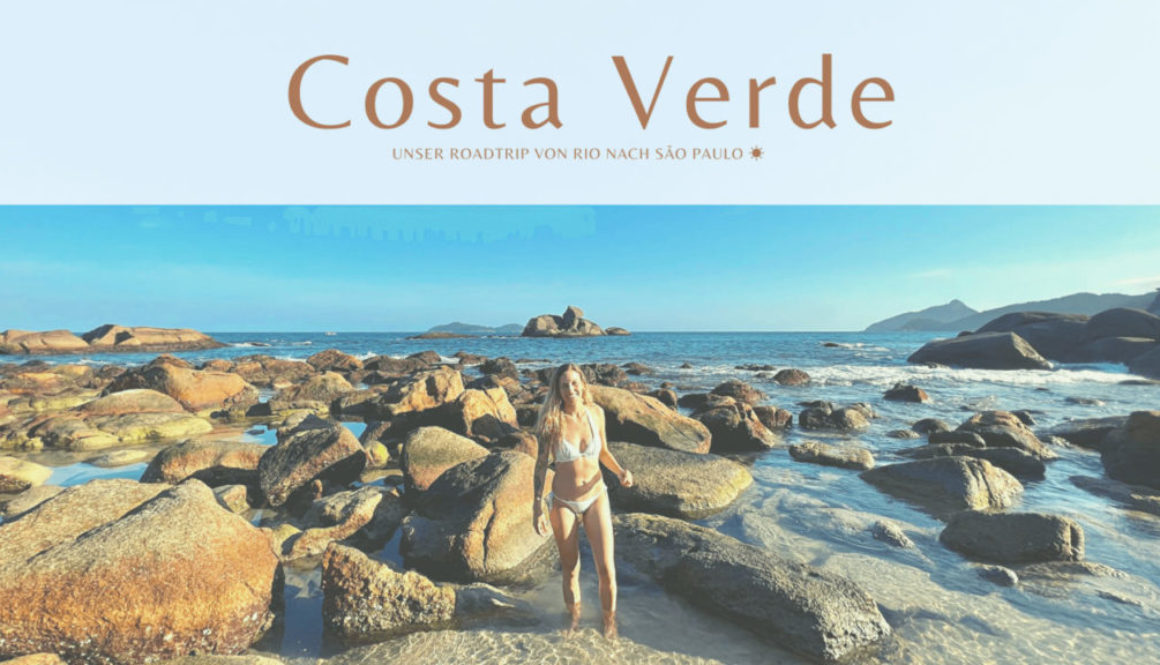
After Carnival in Rio, we embarked on an 8-day car rental tour along the Costa Verde. Our first stop was Ilha Grande.
A stunningly beautiful island & definitely one of my MUST SEEs in Brazil! 😍☀️
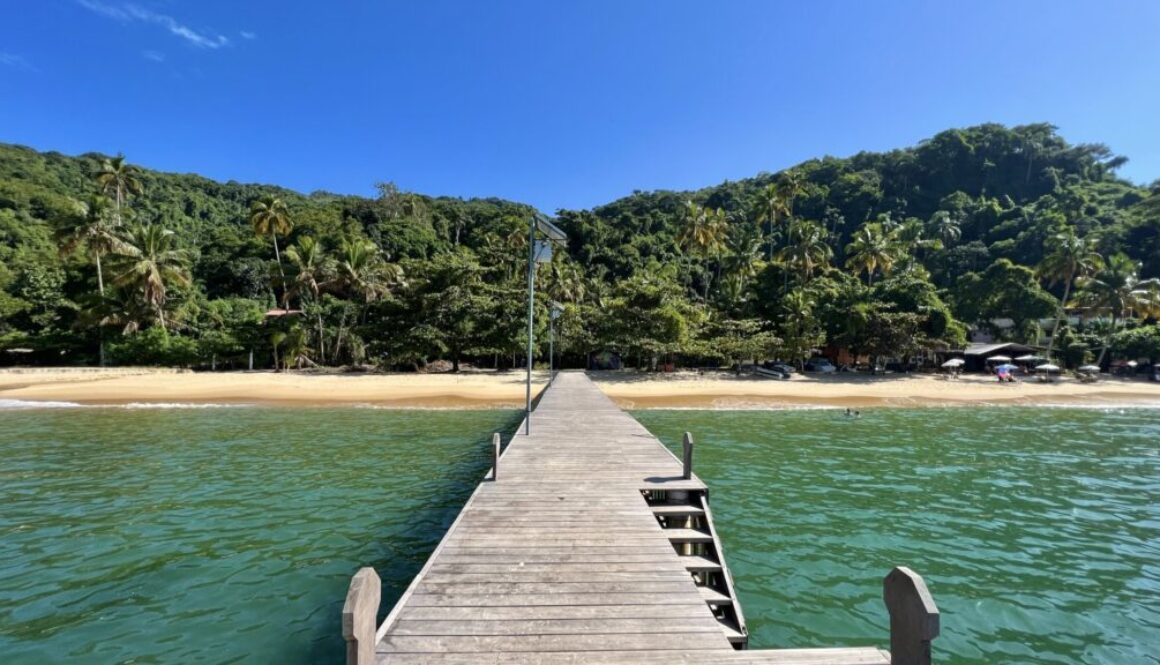
On the first day, we took a speedboat from Angra dos Reis to Ilha Grande🚤. The crossing took half an hour in total. When we arrived, we were completely speechless😶. A beautiful golden beach, crystal-clear water & in the background, the green jungle🥰. Where have we landed? In paradise?😮🙌
It was simply indescribably beautiful. But the best part: the deserted beaches! Absolute peace & pure nature!
In our first accommodation, we had a cute balcony overlooking the sea. What could be better than relaxing in a hammock & listening to the birds chirping? Maybe a hearty breakfast? I don't know. I found both awesome! 😄
In the evening, we strolled around the small village. Here you'll find shopping opportunities & plenty of restaurants on every corner. Prices for a good dinner range from about 20-30 euros per plate, so quite high! In the supermarket, prices are roughly the same as on the mainland - but of course, with slightly less choice. You can get clothes here at fairly reasonable prices.
The tours are inexpensive. We paid 20 euros per person for our 5-hour snorkeling tour. Totally okay 😛 With this water, snorkeling is also one of the MUST DO's! The underwater world was incredible!
Overall, we had a lot of fun! Ilha Grande was one of my absolute highlights on our tour🥰! It definitely won't be the last time we visit this beautiful island! So, if you love snorkeling with turtles, sunbathing on a deserted beach, & swimming in crystal-clear water - you're in the right place! ☀️😍
Party☀️
Next, we headed back to the mainland. From there, we got our rental car to drive to Paraty🚘. The car ride was super easy. Finally, no potholes on the roads! 👍 Fuel prices are around 1.20 euros per liter. ⛽️
When we arrived, we were initially enchanted by our new suite at the Hotel Pousada do Ouro! The whole building, like the city of Paraty, is kept in a chic, colonial style. Incredibly cool! 😎
In the afternoon, we explored the beautiful old town of Paraty. There were restaurants and small boutiques on every corner🛍. Jewelry makers sold their handmade works in the narrow streets. Everything was very well maintained. I was particularly fascinated by the beautiful, brightly painted doors! 🖍
In the evening, the city exuded a romantic charm. It reminded me of the sweet fishing village in Faro - one of my absolute highlights from Portugal. I love those gold-yellow lanterns❣️
São Sebastião 😊
On the way to São Sebastião, we made a few stops at great waterfalls! That's what I love about road trips. Just stop wherever you want. Max took the pictures - Doesn't it look like something out of a storybook, right? ☺️
When we arrived at our new accommodation at Maui Maresias, there was a little gift for me on the bed🎁. Have you ever received a piece of jewelry from a hotel? It was definitely the first time for me! 🥰 Later, we had a freshly squeezed juice outside. Meanwhile, a saxophonist played his music - absolutely delightful atmosphere! 🎷🎶
The next day, we spent a night at our final accommodation called Nau Royal Hotel Boutique and Spa. As the name suggests, there was a large spa offering & outside there was a swimming pool, as well as a whirlpool with a sea view. We also enjoyed the view during the rich breakfast! The staff were once again very nice & fulfilled our every wish. A nice end to our Costa Verde tour!
Conclusion: The Gateway Tour was one of the best parts of our Brazil trip. My absolute highlight was definitely Ilha Grande - this island simply enchanted me🪄. The waterfalls were also particularly beautiful & of course, the chic accommodations - with the super delicious breakfast! It was sooo nice not to have to plan anything. The organization went smoothly - there were no problems at all👏😍! A big thank you to the great Gateway Team 💐!
You can find more information about the tour here:
By speedboat from Angra dos Reis. The crossing took a total of half an hour.
How expensive is Ilha Grande?
A good dinner costs around €20-30 per plate, which is quite expensive. Supermarket prices are roughly the same as on the mainland, but with less variety. Clothing is reasonably priced, and tours are affordable: we paid €20 per person for our 5-hour snorkeling trip.
Is renting a car worthwhile on the Costa Verde?
Yes. The drive was super easy—finally no potholes in the roads—and gas prices are around €1.20 per liter. The great thing about road trips is that you can simply stop wherever you want, for example at the waterfalls on the way to São Sebastião.
What was the highlight of the tour?
Ilha Grande. Golden sand, crystal-clear water, lush green rainforest in the background — and above all, deserted beaches. The underwater world was incredible while snorkeling, and we even saw little monkeys on a hike through the rainforest.
Parade tickets: approximately 50 euros per person in advance — we paid 100 euros spontaneously.
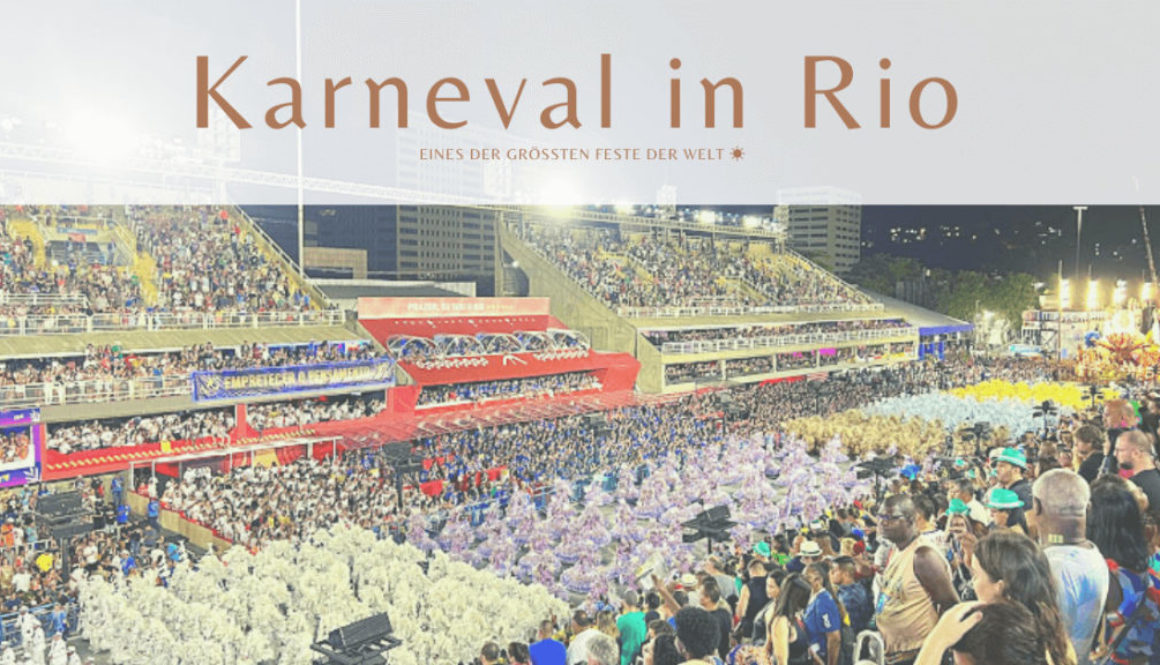
Sambadrome: Space for around 90,000 people, 700-meter-long street, 6 samba schools
Each samba school attracts at most 2 hours, then a 20-30 minute break
Per person, the number allowed is... 2 x 500 ml Plastic bottles and 2 snacks
Arrive 2-3 hours early and bring a cushion — you'll be sitting on stones.
Here's what you should know before going to Carnival: 🥳
Usually, bags are not allowed! However, I didn't have any problems and could simply bring my big fabric bag. 😛
Each person can bring 2x 500ml plastic bottles (alcoholic drinks are allowed too! 🍻)
Each person is allowed 2 snacks🍫.
It's not common for spectators to dress up big. A bit of glitter here & there is totally sufficient. ✨
Food & drinks are affordable at the counter! 🍽
Each samba school performs for a maximum of 2 hours - then there's a 20-30 minute break. ⏸
Toilets are free & easily accessible. 🚻
You should be there about 2-3 hours in advance to secure a good spot! 🪑
There's plenty of space & you won't feel crowded (at least that was our experience). 🙂
Wear comfortable shoes or just take them off (there's plenty of dancing) 💃
Bring a cushion or a blanket as you'll be sitting on stones. 🥰
Find a group to party with before the event, e.g., on Facebook. 👯♀️
The event is on Brazilian time. So, don't expect German punctuality! 🕦
If you want to see all 6 samba schools, expect to be there all night! 🎇
You won't need a jacket in these temperatures! It's more likely to be too hot than too cold! 🥵
Book tickets & accommodation early!!! (around 50 euros per person) 🎫
Don't forget your good mood! 🥳
Off to Rio de Janeiro 🥰
This year, due to Corona, Carnival was postponed to April 20-30. On April 23, 2022, we took our flight at 03:00 in the morning from Fortaleza to Rio. So we arrived pretty exhausted. 😄 Our accommodation was right on Copacabana Beach. A beautiful beach! 🥰 Of course, hotel prices were extremely high again. For a really shabby hostel, you'll have to reckon with 60 euros per night (for spontaneous booking). Luckily, we got the last relatively good accommodation! 😌
During our last stay in Rio, we met a group via Facebook, which we met up with again. At first, we thought there would be a lot going on at the beach, but no such luck 😄. That's why we quickly got tickets for one of the biggest events in the world - the Carnival Parade 😍. Here, a total of 6 different samba schools performed. An incredible experience! 💃
Small tip: Always book tickets in advance! We paid double - so 100 euros per person! 🤓🤦♀️
In total, there is space for about 90,000 people. The best samba schools (escolas do samba) parade along the 700-meter-long street of the Sambadrome. I couldn't stop marveling. 🤩 One artistically decorated float after another passed by us. I don't even need to start on the fascinating dancers. It was simply impressive! 😍
There was also a totally beautiful fireworks display 🎆! The music was great & everyone was singing along loudly. Some even danced samba in the stands. It was a totally crazy feeling. You didn't know where to look first! 👀
Fact is: You should see this breathtaking event at least once in your life! Believe me ☺️
I can only say it again: It was breathtaking! 🤩 Here's another before & after picture:
In the end, we finally took an UBER back to the hotel & fell asleep with our earworm. 😴 Despite the shower in the evening, everything, but really EVERYTHING, was covered in glitter the next morning 😄 And let me tell you, that glitter is stubborn! Days later, we found glitter in our washed socks. Hallelujah. Finally, we set off for our next adventure: an absolutely amazing road trip from Rio de Janeiro to Sao Paulo! 😍
How much do tickets for the carnival parade in Rio cost?
Around 50 euros per person if you book early. We booked spontaneously and paid double that, so 100 euros per person. Book your accommodation early too: for a really shabby hostel, you'll easily pay 60 euros a night if you book last minute.
What am I allowed to bring to the Sambadrome?
Normally, bags aren't allowed—however, I had absolutely no problems with my large cloth bag. Two 500ml plastic bottles are permitted per person, including alcoholic ones, plus two snacks. Food and drinks are available at the counter for a reasonable price, and the restrooms are free.
How long does the parade last?
Each samba school performance lasts a maximum of two hours, followed by a 20- to 30-minute break. If you want to see all six samba schools, expect to be there all night. And don't expect German punctuality.
Do I need to dress up as a spectator?
No. It's not customary for spectators to dress up in elaborate costumes—a little glitter here and there is perfectly sufficient. Wear comfortable shoes; there will be plenty of dancing, and you won't need a jacket in these temperatures.
Buffet plates in Rio: approximately 2.50 euros, weighed at around 70 cents per 100 grams
Beer or freshly mixed Caipirinha: 2 euros — even on the beach
Christ statue on Corcovado: 30 meters High, entrance fee plus train fare approx. 15 euros
Sugarloaf: approximately 40 minutes steep uphill climb, second stage only accessible by gondola
Carnival cancelled — but accommodations still cost at least twice as much.
🥗🥗 Food in Brazil is simply amazing! 🥗 🥗
There are cheap buffet restaurants on every corner (plate portion about 2.50 euros! 🤑) & here you really have everything to choose from, whether healthy 🥦, greasy 🍔, vegetarian 🥬 or grilled 🍗! The plates are weighed (about 70 cents per 100 g). Beer or a delicious Caipirinha freshly mixed will cost you 2 euros (also at the beach!). I especially LOVE Acai, whether as a milkshake, ice cream, or bowl! It just tastes SUPER 😍!
SUSHIPlate portion approx. 2.50 eurosACAINighttime craving for fries Breakfast buffetCaipirinhaA different kind of crepe...
When shopping, every little thing is packed in an extra bag. Usually even directly in 2! Whatever 🤷♀️
We've gotten used to always bringing a cloth bag 🤓
Museu do Amanhã😊
Museum of Tomorrow
Science, technology and knowledge in sustainability🌿
The museum was super interesting! But also somewhat frightening to see the "expected" future of the world… 🥺
Every day is great with my sweetheart! 🥰
Escadaria Selarón😊
by the artist Jorge Selarón
He called it "my homage to the Brazilian people".
You can't believe how crowded it was 🤯! People formed whole lines to get the "perfect" photo on the colorful steps 📸.
We just took one on the side 🤓. At 35 degrees and a lot of steps, we don't need to climb to the highest step 😝
Christ the Redeemer🤩
… one of the 7 new wonders of the world…
The Christ the Redeemer statue on Corcovado Mountain was really impressive at 30 meters high! 😯
But at least as cool was the amazing view! 🔨
And not to forget: the cool train ride through the jungle! 🍃
Cost: about 15 euros per person for entry + train ride // Tip: the earlier, the better & book on the official website! 😉
Walk over the market
Ohhh how I love markets! You never know what to eat or drink first.
Super cheap, freshly squeezed juice and traditional food! Yummy! 🤤 Yummy!🤤
Max has discovered his love for Caipirinha 😂
Carnival🥳
A little taste of it 🎉
Once again, our dear friend Corona spoiled the fun for us ☹️. The carnival was canceled. Of course, the hotel prices were not canceled though, they were totally overpriced. Accommodations were at least twice as expensive as usual and almost fully booked weeks in advance 💸. Nevertheless, some people still partied in the streets. Most people were dressed liberally or in funny costumes 🤡. Many men and women were topless and mostly wore thongs or swimsuits 👙. It was absolutely crazy. Everywhere, there was a good mood. People were covered in glitter, painted in bright colors, and dancing wildly in the streets 💃🕺!
The fact is: We want to experience the real carnival! That's why we're coming back at the end of April (new date for this year's carnival).
Beach Meet up ☀️
That's why I love Facebook so much! We found a great group that regularly meets up at the beach.
Together, we chatted a lot and enjoyed some delicious passion fruit cocktails! 😍
Passion fruit cocktail 😍
Afterwards, we indulged in some delicious pizza! 🤤🍕
Pão de Açucar
Hike to Sugarloaf
It took about 40 minutes steep uphill. We were surrounded by magnificent plant life! 🌿
Unfortunately, we didn't see any monkeys or snakes, but we did see a Blue-chinned Sapphire hummingbird 😍
Good to know:
It is also possible to take the cable car up.There are two stages. You can hike up tothe first stage, but you need a cable car ticket for the secondstage!
The next few days, we saw the beautiful
Cathedral of Rio de Janeiro
☀️☀️ Smallconclusion from Rio de Janeiro ☀️:
Rio is totally beautiful 🥰! The wide beaches, the delicious food, the fruity cocktails, the party-crazy people, and the impressive sights.
Unfortunately, there are, as in almost every country, also downsides here… Every day you are confronted full-on with the homelessness of people. They lie around randomly on the sidewalks. Among them, the garbage and one, two cockroaches. Feet as black as I have never seen them in my life. Some beg, some desperately try to sell something, and others just lie motionless. Definitely, there are also drugs in play more often. One day I even saw a child lying on the sidewalk. Opposite him, his father. Just terrible… 😔
But now it's time to say goodbye to Rio again! 👋🏻
We'll see you again soon! Keep your fingers crossed that the carnival won't be canceled again!
Next Stop: Cumbuco
Frequently Asked Questions
How much does food cost in Rio de Janeiro?
There are inexpensive buffet restaurants on every corner: a plateful costs around €2.50, weighed at about 70 cents per 100 grams. You can get a beer or a freshly mixed caipirinha for €2, even on the beach.
How much does it cost to visit the Christ the Redeemer statue?
Around €15 per person for entry and the train ride. My tip: the earlier the better, and book on the official website. The statue is 30 meters high, and the train ride through the jungle is at least as cool as the view.
Can I hike up to Sugarloaf Mountain?
There are two levels. You can hike up the first one—for us it was about a 40-minute steep climb, surrounded by magnificent flora. For the second level you need a gondola ticket.
How do I connect with people in Rio?
Via Facebook. We found a group that meets regularly at the beach — chatting, cocktails, then pizza.
Tip: Locals appreciate 1-2 soles (about 30 cents).
Toilet paper belongs in the trash can, not the toilet.
When traveling, it's best to use Uber instead of taking a random taxi.
The drinks
National Drink: ,"Pisco Sour"‘
made from grape brandy, egg white, lime juice, and a bit of sugar.
Chicha Morada
Made from cinnamon, sugar, pineapple, purple corn, and clove.
Coca - Tea
Made from coca leaves, similar to green tea.
Inca Kola
Extremely sweet with a bubblegum-like taste, similar to Mountain Dew.
Freshly squeezed juices
All kinds of fruit juices are available.
The food
Local restaurants are abundant and cheap.
They are super cheap and tasty as well!
Prices approximately:
1-2 Euro for Chaufa (rice, vegetables, chicken, egg)
3 Euro for a burger menu with fries and a drink
2-3 Euro for various soups
4 Euro for higher-quality meat dishes
The touristy restaurants are roughly twice-three times the cost.
Try the national dish Ceviche: .
Raw fish with accompaniments.
Enjoy a Crepe with fruits.
A fruit dream!
Churros
similar to filled doughnuts.
Dulce Leche
Taste Dulce de Leche, similar to Nutella.
Chaufa or Aeropuerto
a rice dish with various vegetables, chicken, and egg.
Arroz con Leche
just arroz con leche ^^
Soups
There are hundreds of soup variations.
For the adventurous - Try Cuy!
a type of guinea pig.
Craving European food?
You'll find good pizza, pasta, potato dishes, burgers, and more.
For Fruit Lovers:
Granadilla (Genus: Passion Fruit)
Prickly Pear (Cactus Fruit)
Chirimoya (Taste: Banana, Pineapple, Cinnamon)
Yellow Pitahaya (Dragon Fruit)
Watermelon
mango
Should I give tips?
Definitely! Locals appreciate even 1-2 Soles (30 cents).
The Weather:
Naturally, the weather depends on the seasons. We were there during the rainy season in December, and apart from occasional 15-minute showers or a rainy night, there wasn't much to notice.
Also good to know:
Peruvians apparently don't like to heat places. Often, it's very cold in establishments, so you often see people sitting there with jackets.
People:
Incredibly friendly and helpful.
They live very family-oriented lives and work long hours, even at a very old age.
Many don't speak English, so knowing basic Spanish words is helpful.
Nature:
Breathtakingly diverse. Peru has so much to offer in terms of natural beauty.
Accommodations:
Standards may not match those of Europe, but most hotels are clean and well-maintained.
Sanitary Facilities:
Toilet paper goes in the trash, not the toilet.
----
Make sure to bring your own toilet paper as it may not always be available.
-----
Hygiene:
Good. As mentioned in my other blog articles, it takes some getting used to. Especially in the markets, people often have long, dirty fingernails, and the meat is left in the blazing sun. Flies crawl over some uncovered meat, and dead guinea pigs are stacked in a plastic bucket, while the fruit is placed among free-roaming dogs, on a tarp, on the ground.
Don't be discouraged! We didn't have any stomach problems, so it can't be all that bad! Just wash everything thoroughly, and you'll be fine!
Additionally, you have the option to spend a bit more money and achieve a higher level of hygiene!
Altitude:
Keep in mind the extreme differences in altitude between places. Altitude sickness(dizziness, headaches, etc.) is not uncommon, so prepare before your travels!
Safety:
Peru is one of the safest countries in South America! Of course, you should still keep an eye on your belongings, but that's a general rule anywhere in the world.
The Police:
In the city, the police are often overtaken by cars without any reaction. In Germany, you would have been stopped 10 times already. It's a different world. Definitely!
The police even run red lights...
Currency:
The currency here is the Peruvian Sol.
1 Euro is approximately 4.5 Sol.Traffic:
Traffic:
"Insane" is the right word, I think! Red lights are often ignored. Honking is constant. The cars drive very closely and all look quite damaged. There are many road damages, and people don't often wear seatbelts here. We prefer to avoid renting a car. Driving yourself is definitely risky.
Transportation Options:
Of course, you can also take the bus here, but it's usually overcrowded. It's best to use UBER, as you can get from A to B relatively safely and at a reasonable price. However, be prepared to ride without a seatbelt here too... Don't just hop into any random taxi!
Conclusion:
Peru is definitely a country that I would recommend to everyone. It's especially great:
if you love nature
enjoy hiking
love to indulge in local cuisine
want to live affordably
want to experience a new culture
and want to immerse yourself in a completely different world.
Frequently Asked Questions
How expensive is food in Peru?
Local restaurants are very inexpensive: 1 to 2 euros for chaufa with rice, vegetables, chicken, and egg; 2 to 3 euros for soups; 3 euros for a burger meal with fries and a drink; 4 euros for higher-quality meat dishes. In tourist restaurants, you'll pay two to three times as much.
What currency is used in Peru?
The Peruvian Sol. One Euro is approximately equivalent to 4.5 Sols.
How can I get from A to B safely?
The best option is Uber: relatively safe and inexpensive. Buses are usually overcrowded, and you shouldn't get into any random taxi. We prefer not to rent a car—driving yourself is risky here.
What do I need to be aware of regarding the restrooms?
The toilet paper goes in the bin, not the bowl — the plumbing system can't handle it. And bring your own paper, often there isn't any.
When is the rainy season in Peru?
We were there in December during the rainy season. We didn't notice much of it: just the occasional 15-minute shower or a rainy night.
Bus to Puno: 8 hours, without air conditioning and fully occupied
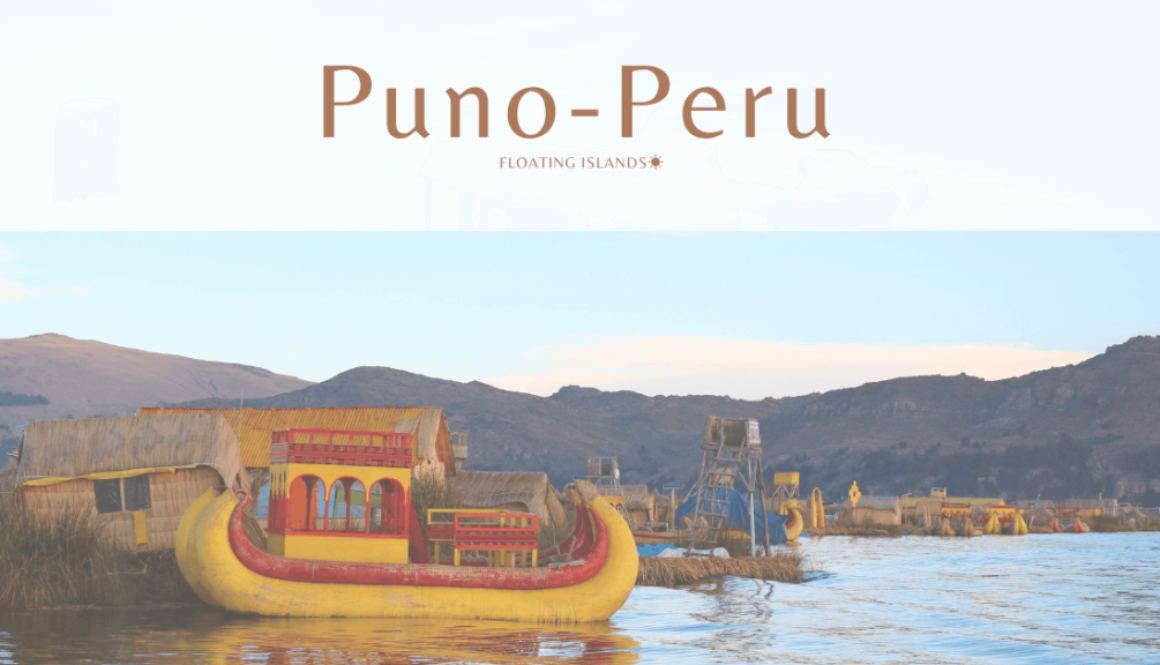
Uros Floating Islands: floating islands made of Tortora reeds
It is possible to spend the night on a floating island.
Kayaking and canoeing are included.
The first day of the new year
Once again, we dared to board a bus that should transport us to Puno for 8 hours. Once again, we regretted it. The bus felt like it was 50 degrees Celsius inside, and without air conditioning, it was quite uncomfortable. Additionally, every single seat was occupied, and it felt like everyone was breathing too much. Fortunately, after a few hours, we managed to secure seats in the lower compartment of the bus where the temperatures were more bearable. So, this is how we started the new year. In a stuffy, shaky bus, haha.
But not too bad, because we were on our way to our next adventure!
Fancy, isn't it?
Uros Floating Islands
Once we arrived, we hopped on a boat to visit the so-called "Uros Floating Islands." Uros FloatingIceland ".
It's a very impressive group of islands floating on the water, built from totora reeds.
Fascinating! Many families live here right in the middle of Lake Titicaca.
A local explained to us briefly how it all works. Apparently, the reeds have a very thick root that floats on the water's surface. If you connect several pieces of roots together, they grow together after a few years. Then, reeds are laid out in a cross shape on the ground, and voila! You have the foundation to build a shelter.
It's somehow completely unimaginable: a "floating" home on the water. But for the families here, it's completely normal.
The fact is: We have to try this.
"Sleeping on a floating island in the middle of the famous Lake Titicaca once!"
Ouraccommodation from the outside
Accommodation from the inside
An incredible panorama unfolded. Pure tranquility and fabulous sunsets.
Of course, kayaking and canoeing were also part of the experience!
The traditional boats are filled with collected plastic bottles so they don't lose their buoyancy.
But, like almost everywhere in the world, not everything is perfect here either.
Due to COVID-19, tourism has almost completely dried up, which used to finance the lives of the locals. As a result, many families have to move to the city to find work. There is also a school on the floating islands, which has been closed for months due to COVID-19. No education for the children... Even in the city, schools remain closed!
Next stop: Arequipa
Frequently Asked Questions
How long does the bus ride to Puno take?
Eight hours. It felt like 50 degrees in our bus, every seat was occupied and there was no air conditioning — it only became more bearable in the lower compartment.
How are the floating islands constructed?
Made from Tortora reeds. The root is very thick and floats on the water; if several pieces of root are joined together, they grow together after a few years. Reeds are then laid crosswise on top – this forms the base for the huts.
Is it possible to stay overnight on the Uros Islands?
Yes, that's exactly what we did. An incredible panorama unfolded before us, along with peace and quiet and fabulous sunsets.
Additionally, around 150 US dollars for hot springs, restaurants, tips
Start at 3,900 m, highest point 4,630 m, Machu Picchu 2,400 m
Toughest day: 22 km, 730 meters uphill, 1,700 meters downhill
Hot springs on the third day: 3 euros, water around 32 degrees.
Day 1:
The adventure begins
4 a.m.:
Riiiiing, Riiiiing! Alarm goes off! Grab our stuff and off we go!
Finally, our trekking tour, which we had been eagerly anticipating for so long, began. First, we drove for about 2 hours to Mollepata.
In our group were two couples (a Colombian, a Chilean, and 2 Englishmen), and additionally, there were two Americans. In total, we were 8 people, all more or less the same age. Great team! Good start! Upon arrival in Mollepata, we had a hearty breakfast. YUMMY!
Strengthened and absolutely motivated, we drove 1 hour further to Challacancha. From here, we started our first 7 km hike to Soraypampa. Around us were huge, snow-capped mountains and an Inca canal, which still transports water to the villages today. The narrow paths, the incredible views, and the light mist somehow made it all feel a bit mystical. Mystically perfect. Three hours later, we reached our first campsite, where we had lunch.
And lunch: Oh my God! It was so delicious!
And a good view for lunch!
Quote from our tour guide:
"You won't lose weight on this tour.
You will get some''
How true. How true.
After lunch, we took another 3 km round trip to Humantay Lake. First, it was quite a hike uphill.
This time, we were surrounded by horses, lots of greenery, and again, gigantic mountains.
Some were already struggling due to the altitude and slowed down.
Despite the rainy season, the sun shone all day long, so we continued in T-shirts quite quickly.
After all the effort, then: Humantay Lake. Wow. Just WOW! Take a look for yourself:
About 2 ½ hours passed, and we finally reached our campsite again. Small glass domes with breathtaking views of the stars! What more could you want?
To prevent the glass domes from reflecting too much, they are covered during the day.
Interior view with cover
In the meantime, we were treated to delicious coca tea and given plenty of snacks and a mega dinner!
Dinner
Finally, a few pictures from the tour:
Day 2:
The toughest day of the tour
On the second day, the most strenuous hike began. Already at 5:00 a.m., there was a knock on our door, and TADA a fresh Coca Tea was delivered to our bed. After (as always) a fantastic breakfast, we tightened our hiking boots, grabbed our trekking poles, and quickly stuffed a snack or two into our pockets. And off we went. A full 3 hours (7 km) uphill towards the Salkantay Pass.
Arrived. Way up high!
Let's go on! 6 km downhill. However, with those 1000 slippery stones, it was quite exhausting! But for some reason, we had incredible luck again. It only started raining when we stopped for lunch in Huayracmachay and stopped exactly when we continued.
Unfortunately, the stones were even more slippery now!
Everyone made at least one funny "slip-up move" until eventually, the path became a bit flatter.
Suddenly, we were surrounded by a tropical forest. Plants were blooming everywhere, birds and butterflies flew past us in their various colors, and the temperature rose.
We were in the so-called "Cloud Forest," which stretched over 9 km.
Why is it called the Cloud Forest, you might wonder?
A few more pictures:
Hot. Tiring. Legs and feet noticeably sore.
What could help? Cold beer!
For this reason, we took a break at a bar where an old lady worked. Our tour guide was once very good friends with her husband before he died. After a short time, the lady's eyes became teary, and she told us about her loss. She misses him very much. She is alone. Has little money. Has to take care of everything herself. Bears great responsibility, and due to COVID-19, there are no guests. Despair. Great despair.
How we hope that everything returns to normal!
The journey continued towards the destination. The Salkantay team has opened a completely new accommodation, which we all should inaugurate.
A bit excited, our path led us alongside rivers and waterfalls.
Done!
In the background, you can see the accommodations.
Wow. Wow. Wow. Have you ever seen anything like it? Absolutely wow. Definitely an extraordinary overnight stay. And I thought that the first night in the glass domes with a view of the stars couldn't be topped. Well, here's the proof:
Outside view of the accommodation
Inside view of the accommodation
After we had calmed down from our amazement, it was time for dinner. Afterwards, we played a few rounds of Uno and emptied one or two bottles of whiskey.
In my eyes, there is nothing more disgusting than whiskey. Sorry - whiskey lovers!
The day ended slowly after a 22 km hike, with an ascent of 730 meters and a descent of 1700m.
Starting altitude: 3900 m
Highest point: 4630m
Put your feet up! Good night!
Day 3:
Hiking. Coffee & Jungle Dorms
Like every day, we were awakened with a Coca Tea, but this time at a somewhat more bearable time of 5:30 a.m. After breakfast, we all gathered to bid farewell to the horse guide. Our luggage, such as our change of clothes, was transported by horses, and the horse guide made sure they arrived safely! With a big hug, a few kind words, and some tips, we said "Hasta Luego!"
But what about all our luggage now? Up to this point, the cook, the assistant, and the horse guide had also been hikers, just like us. But from today onwards, the paths allowed the use of vehicles again, in which our stuff could be taken along.
Hooray! Finally, we set off.
On the sides of the road, large avocado and banana trees stood out.
We could hear the water splashing, while in front of us, the huge variety of plants and insects appeared.
This time, the hike was rather "easy," I would say. Super flat route. No big ups and downs. However, some had already developed problems with their knees or hip joints. Most likely from yesterday's downhill hike.
A few hours later, we stopped at a small café in the middle of nowhere. There we tried the delicious, sweet-tasting Granadilla, ate mangoes, and also had a nice, fresh orange juice.
Granadilla
Two dogs played beside us, who then followed us everywhere.
Rain. Damn. Put on the rain poncho. Let's go on!
A total of 18 km later, we visited a family who showed us how they make their coffee.
Max roasting the coffee beans
Shortly thereafter, we ate and moved into our new sleeping quarters in the "Jungle Dorms."
Jungle Dorms Exterior
Jungle Dorms Interior
But sleeping was not yet on the agenda! First, we went to the beautiful hot springs.
Pure relaxation with a water temperature of about 32 degrees and surrounded by huge mountains.
What a beautiful end to the day for only
Before I forget!
After that, we encountered such a dog. Mhh... Okayyy... Personally, I don't find it really pretty. However, here in Peru, it's an absolute hit.
A Peruvian Hairless Dog. Elegant, expensive, and incredibly valued. The advantage: With such a dog, you definitely have to vacuum less often! Honestly, it reminds me a bit of the hyenas from The Lion King. But for some reason, it still had something sweet when it looked at you so faithfully.
Day 4:
This day turned out differently than planned!
It rained heavily the night before, making it too dangerous to climb the mountain to LLactapata.
Besides, we wouldn't have had any visibility from the top anyway.
So, we first continued by bus and later hiked for 3 hours towards Aguas Calientes, along the train tracks.
Again, we were surrounded by a tropical forest and wonderful animal sounds.
Indescribable.
In the evening, we checked into the hotel and took a long, hot shower first.
After stuffing ourselves, we lounged in front of the TV.
Well-deserved!
Aguas Calientes
Day 5:
MERRY CHRISTMAS!
The time has come. We're visiting one of the seven new wonders , and that too on Christmas Eve! Oh yes!
Machu Picchu. Be careful. Be careful.
With this word, please pay attention to the pronunciation, otherwise, it could quickly mean
"old tail" for the locals instead of"old peak"!
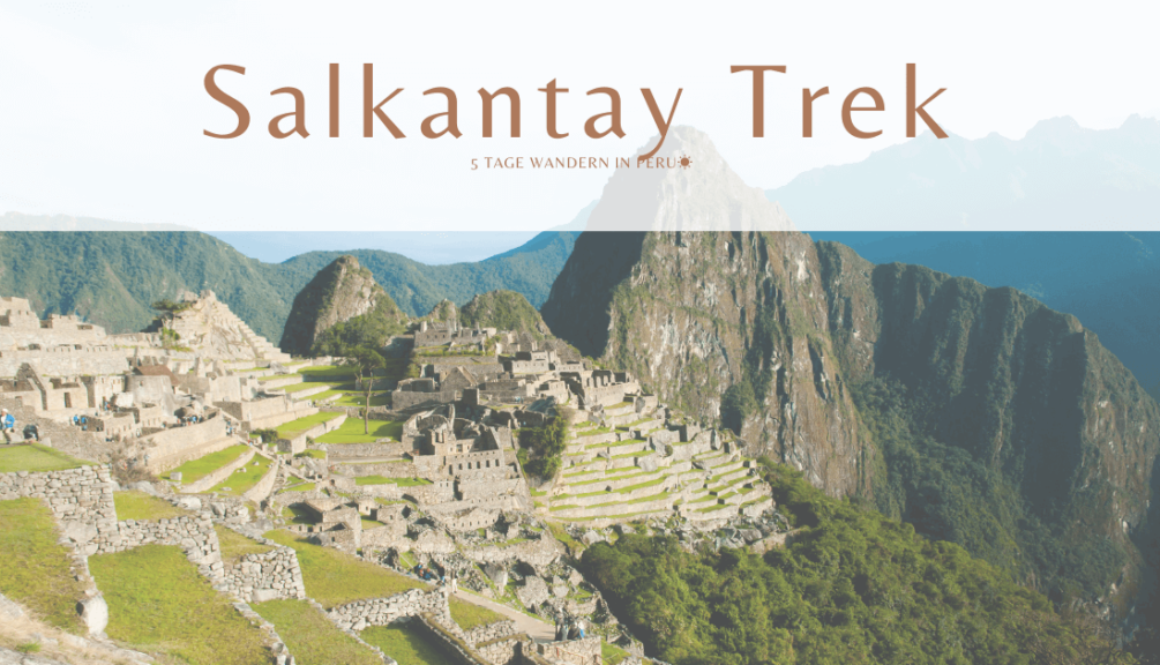
The Inca city of Machu Picchu is located at an altitude of 2400 meters and remained a hidden city for over 400 years.
Particularly impressive was that every 10 minutes, the view of Machu Picchu changed from completely covered with clouds to completely clear. So, we quickly grabbed our cameras and took photos, photos, photos.
Gradually, the last day of the Salkantay Tour came to an end, but not for our team!
I'dcall it a panorama train!
We returned with the ultra-cool train and arranged to have a Christmas dinner with the group at Plaza de Armas and
chatted, chatted, chatted.
Merry Christmas!
Additional Information:
Cost of 5-day tour:
$480 USD, including accommodation, mostly meals....
Additional costs approx.: $150 USD per person
for hot springs, some restaurants, tips, souvenirs....
Hiking poles
I'm super suglad to have had them! They're kinder on the knees!!
Rain poncho & waterproof shoes
These are totally sufficient,, These are totally sufficient, in my opinion!!
Thick sleeping bag
Especially at night, it can get quite cold!
Available for rent at most providers.
Thermo-leggings
I found the leggings perfect for the hike!
Mosquito spray
You must have this with you!!!!
If you now feel like having the same adventure, you can find our tour provider here, whom we can absolutely recommend:
The five-day tour cost US$480 per person, including accommodations and most meals. Additional costs of approximately US$150 included hot springs, occasional restaurants, tips, and souvenirs.
How strenuous is the second day?
This is the toughest: three hours and seven kilometers uphill to the Salkantay Pass, followed by six kilometers downhill over slippery rocks. A total of 22 kilometers with 730 meters of ascent and 1,700 meters of descent.
What do I need to pack?
Trekking poles saved my knees, and along with a rain poncho and waterproof shoes, that's all you need. A thick sleeping bag is essential because it gets cold at night; most providers rent them out. I found thermal leggings perfect, and mosquito repellent is a must.
How high is Machu Picchu located?
The Inca city lies at an altitude of 2,400 meters and remained a hidden city for over 400 years. For us, the visibility changed every ten minutes between completely cloudy and clear.
Cusco is located on 3,400 meters — Plan for altitude sickness
Bus Paracas → Cusco: 18 hours
Boleto Turístico: 130 Sol, Valid for 10 days
Avocado toast at San Pedro Market: 3 soles, about 80 cents
Maras Salt Terraces: 10 Sol (2 Euro) extra
The Horror Trip from Paracas to Cusco
Once again, we booked a bus. This time, the journey was supposed to be a bit longer. A whopping 18 hours! Last time, we had a great experience. We sat upstairs in a double-decker bus, the ride was great, and we could lie down perfectly. Now, we add 14 hours to that, and it's an absolute catastrophe!Crap! Our seats were in the lower section and right at the back of the bus. So, we couldn't adjust our seats all the way back like the other people. First problem. Moving would have been a solution if the whole bus hadn't been packed. Second problem: Right behind us was the air conditioning, and it wasn't by any means quiet. At one point, our entire lunch bag flew through half the bus and rolled into what seemed to be leaked toilet water in the corridor. Lovely! But we couldn't really eat anyway, as we were constantly sliding from A to B or bouncing up and down due to the 1000 curves, mountains, potholes, and whatever else there was. The fact is: We were not feeling well at all! An absolute horror trip!
We made 10 crosses when we finally reached Cusco!
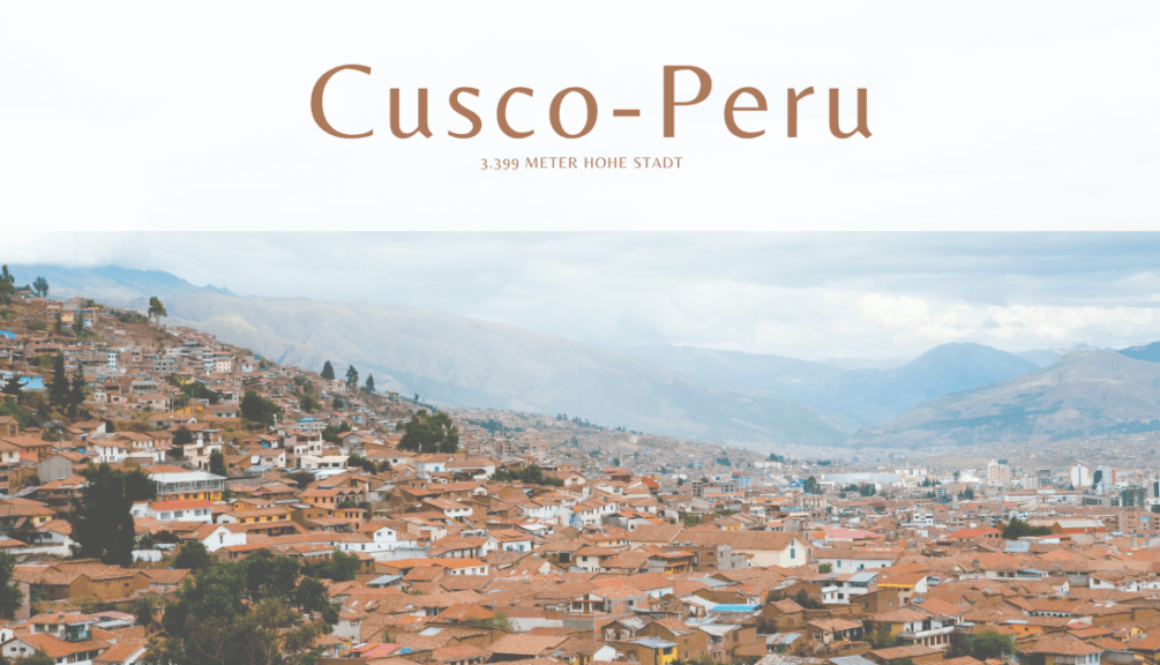
Welcome to Cusco
An impressive city, located at an altitude of 3400 meters! The highest mountain in Germany can't compete with that. Here in Cusco and the surrounding area, you'll first learn about altitude sickness. The higher you are, the less oxygen you have. So, if you travel or climb too quickly to a higher altitude, symptoms like headaches, nausea, dizziness, or fatigue can occur.
Now we're somewhat unsure if we might have perceived our bus journey as an extreme horror trip for this reason too! It took a while for our headaches to go away and our well-being to become more bearable again.
Here are some pictures of Cusco:
We were finally looking forward to our Airbnb. Huge kitchen, large bedroom, living room with TV. Nice. However, at 9 degrees Celsius without heating, not so nice. Actually, we didn't pay attention to whether heating was included when booking (since it was definitely a given for us). No dice. It was colder in our apartment than outside. After a long back and forth with the landlady and contacting the Airbnb team, she finally brought us a space heater. She took a photo of the electricity meter and explained that we would have to pay for the consumption at the end of the stay. So, the landlady wasn't really friendly and showed no understanding that we didn't want to freeze in our apartment (or sit at the table with a winter jacket). Thankfully, Airbnb had a different opinion, and we didn't incur any additional costs.
Somewhat recovered from the horror bus tour and finally warmed up by our new space heater, we went on a tour of the beautiful city of Cusco!
San Pedro Market and Plaza de Armas
First, we went to the San Pedro Market.A huge market full of small food stalls, groceries, and clothing stores with local products. The best part was definitely the delicious avocado toast with fried cheese for only 3 soles (about 80 cents).
Here, we also bought the so-called Coca Leaves..
A few facts about dried Coca leaves:
Tastes like green tea.
Effect: comparable to coffee
Can be drunk as tea
Traditionally, about 10 leaves are rolled together, chewed a little, and then left in the cheek for 20-30 minutes.
Supposed to prevent altitude sickness (helps to suppress fatigue, hunger, and cold)
No risk of addiction
Illegal in Germany (so unfortunately, we can't bring any for you to try!)
Next, we went to the old town to the"Plaza de Armas".A beautiful square with old houses and their beautiful wooden balconies. Everything is decorated for Christmas, there are small food stalls on every corner, or vendors walking around with their alpacas. And alpacas are soooooooo cute!!! Overall, the city is very clean. However, there are a lot of free-roaming dogs here, so there is a lot of poop on the ground just outside the city center. Also, here again, you could easily disappear into a huge hole in the middle of the sidewalk (So: Watch your Steps!).
Here in Cusco, it's not uncommon to see dead, plucked chickens for sale everywhere on the ground, tables, or in plastic buckets, or even the delicacy "Guinea Pig" (a type of guinea pig).
Guinea Pig
Beautiful in the bright sun, and not uncommonly, some insects crawl over them. Clean, cut fingernails or any kind of gloves are not often seen on the sellers. The right word here, I think, would be: takes getting used to. But I think anyone who has been to Asia is toughened up! So, Max and I still eat the meat, and for some reason, we have no stomach problems at all. Thank goodness! The food here is just insanely delicious and super cheap! You just shouldn't look too closely 😉 ! If someone now says, "I wouldn't eat that" - good luck finding something to eat. Without chicken? Without pork? Hardly possible. Of course, there are vegetarian options here too. But our vegetarian options ordered in restaurants looked something like this: Sandwich with sausage or rice with vegetables and occasionally accidentally one, two, three small pieces of chicken. If you go to the really local restaurants, there's a 99% chance that there won't even be a dish without meat, and you'll get some strange looks if you just want to order vegetables with rice. They won't do that. I suppose many dishes are already prepared and mixed beforehand, so it's not possible to just leave out the meat. Of course, there is somehow the possibility to survive as a vegetarian, but it's hard. At least harder than in Germany! They have fresh vegetables and fruit, but you just have to be careful about what and where you order.
Pictures speak louder than 1000 words:Pictures speak louder than 1000 words:
Cusco has half a million inhabitants and was once the capital of the Inca Empire. Therefore, you can book tour after tour here to learn about the life and culture of the Incas. For this, we got a combination ticket, the so-called"Boleto Turistico"This cost 130 soles and was valid for 10 days.
Maras and Moray — Salt Terraces and Inca Site
We first did the Maras y Moray Tour:
Moray is an ancient Inca site and was used for agriculture back then. For example, a lot of potatoes were planted in various varieties and colors. The water seeps away through the stones underground, so that there is no large accumulation of water.
For only 10 soles (2 euros extra), we could visit a mosaic of 4000 salt fields near Cusco
Furthermore, during the tour, we were also shown how various fabrics are made. What was particularly interesting was the source of their colors. For instance, tiny parasites lurk on cactus leaves, which release a red liquid when squeezed.
Later, we strolled through the beautiful Christmas market in Cusco, which was located right on the Plaza de Armas. Normally, the market only takes place once a year on the 24th of December, but due to Corona, it was spread out over a few days. There was mulled wine, candied apples, cotton candy, or lard cakes on every corner. Super tasty! With 1000 people bustling around, it was sometimes quite difficult to get from point A to point B. There's a lot to tell about Cusco, but in the next few days, I'll first share our very special adventure.
Onward to the Salkantay Trek
We embarked on one of the TOP 25 hikes in the world! The so-called Salkantay Trek''!
Next stop: 5 days of pure wilderness!
Frequently Asked Questions
What is the altitude of Cusco and what does that mean for me?
Cusco is located at 3,400 meters. The higher you are, the less oxygen you have—anyone who ascends too quickly gets headaches, nausea, dizziness, or fatigue. It took a while for our headaches to go away.
What is the Boleto Turístico?
A combined ticket for the Inca sites around Cusco. It costs 130 Sol and is valid for ten days.
How long does the bus take from Paracas to Cusco?
A full 18 hours. For us, it was a horror trip: seats in the lower compartment at the very back, not adjustable, a noisy air conditioner directly behind us, plus countless curves and potholes.
Do I need heating in Cusco?
Pay attention to this when booking. Our Airbnb didn't have one; at 9 degrees Celsius, it was colder inside than outside — we only got a space heater after a lot of back and forth.
What's the deal with coca leaves?
They taste like green tea and have effects similar to coffee. Traditionally, you roll about ten leaves together, chew them briefly, and hold them in your cheek for 20 to 30 minutes. They are said to prevent altitude sickness and are not addictive. They are illegal in Germany.
Bus Lima → Paracas: approximately 3 hours for a few euros
Ballestas Islands: Boat tour to see birds, penguins and sea lions
Huacachina: Dune Buggy Tour with Sandboarding
Spanish is worth learning — few people in South America speak English
We set off for the small town of Paracas, located about 3 hours southeast of Lima. For this journey, we used a bus for a few Euros, which even had nicely adjustable and padded seats. Perfect!
As we departed, Max placed his newly purchased black sunglasses in the side compartment. There was a couple sitting next to us. A woman with slightly curly, reddish hair, wearing glasses, and aged between 40 and 50. Beside her, a slightly younger, slender man with a colorful cap.
Upon our arrival in Paracas, we queued at the luggage counter to collect our backpacks. Suddenly, Max realized he had left his sunglasses on the bus. The couple behind us seemed very nervous, but at first, we didn't think much of it. The search was futile. When I asked the couple if they had seen the sunglasses, the woman nervously waved her hands and avoided any eye contact. However, the man showed me his grayish glasses that he was wearing and insisted that I take a closer look at them. Something definitely seemed off, but unfortunately, we couldn't search them. So, we left it at that and collected our backpacks. Shortly after, the woman came back to us and, with her slight French accent, said, "The sunglasses were in the side compartment, right?". We agreed. However, that seemed to be just a passing comment from her. But it made us even more suspicious. At least it was only "the sunglasses".
Eventually, we moved on, this time without the sunglasses.
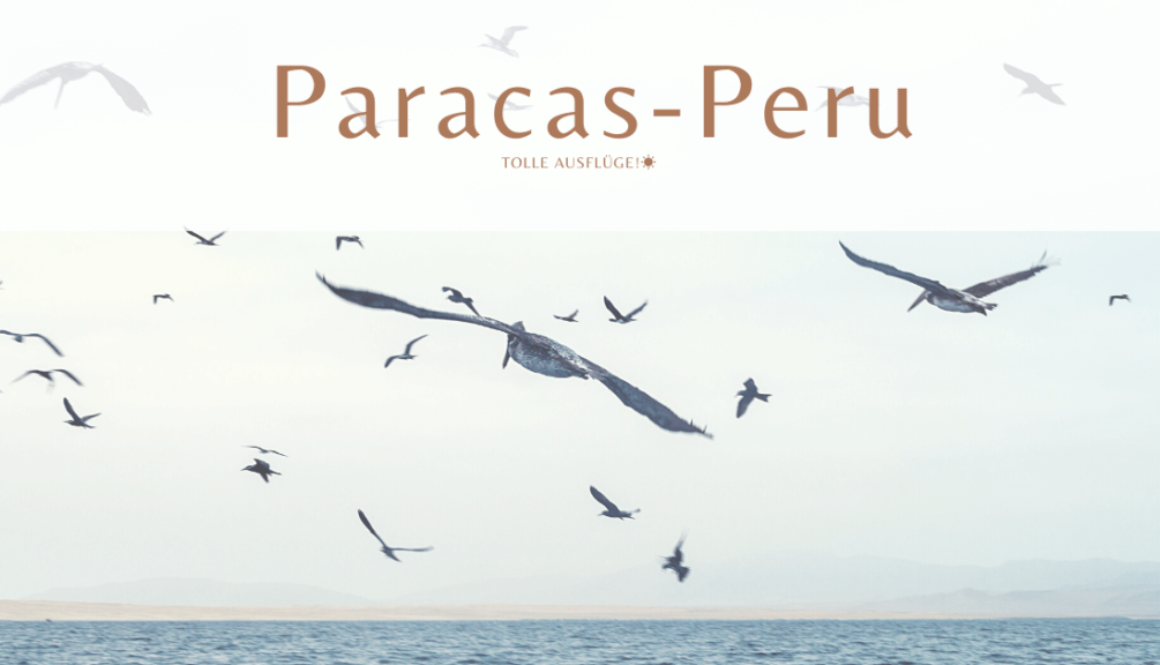
The next day, we had a beautiful sunny weather for a boat tour to the Ballestas Islands. We had never seen so many birds gathered in one place in our lives! The large rock protruding from the water was completely covered with these beautiful creatures! In between, we could also spot a few penguins and sea lions. It was an incredible day and definitely a MUST SEE!
After the tour, we took a leisurely walk along the harbor at sunset.
Paracas was a really beautiful place and definitely worth a visit!
ICA
Originally, we only went to ICA to take the desert tour from there. But now, our stay will probably be remembered for a bit longer. Our hotel had a huge lounge with a pool table, a TV room, a kitchen, and a ping pong table. The room was surrounded by windows with a great view of the city. We often sat there to work. One or two windows were open, and at some point, a pigeon flew in. It tried for a long time to get out, repeatedly pecking at the window with its beak. Alright! We were sure: this pigeon needed help! We tried to carry it out with a broomstick. At first, it seemed very promising, but towards the end, not so much. The pigeon got scared and flew directly to the opposite side. There, it crashed with full force into the window and then fell to the ground. Oh god. It lay motionless. Is it still alive? Is it maybe unconscious? No idea??? Google to the rescue. We followed the instructions and placed it hopefully in the shade, checking on it from time to time. After 2 hours without any movement, it gradually dawned on us that we probably weren't the best rescuers for pigeons.
Huacachina – Desert Tour
In Huacachina, we went on a dune buggy tour with sandboarding. Pure action! The driver of our jeep pressed hard on the gas pedal. We sat right in front and raced up and down extremely steep dunes. I felt like we were about to tip over or slip on the sand the whole time. Max was more relaxed about it. Sometimes the driver would drive right up to the edge and brake abruptly. Heart attack! At the top of a huge sand dune, we grabbed the sandboards. When I looked down, I was sure that I would definitely not survive sliding down the dune with the board and decided it would be better not to do it (...and I never have a fear of heights!!!). A few other group members shared the same sentiment. It didn't take long before Max was ready for the descent. He was the very first one to slide down the huge dune. When he safely reached the bottom, he shouted encouraging phrases like, "Not so bad" and "It's so much fun!". Eventually, I gathered all my courage (it probably doesn't look as dramatic in the pictures and videos, but once you're up there!...) and went down. And it was really FUN! I think that's the most impressive thing about traveling. You do things you never thought you'd do or overcome fears that eventually lead to an unforgettable experience! And of course, having such a great travel partner as I do, nothing can really go wrong. After sliding down almost every dune many times, we finally watched one of the most beautiful sunsets in the middle of the desert landscape. Infinite beauty.
Next stop: Cusco
Good to know:
Here, too, we realized that you should at least master the basic words in Spanish. Not many people in South America speak English.
Luckily, we've been learning Spanish for more than half a year now and can communicate very well. However, I have to admit that Max is a bit ahead of me, but I'm following closely :D!
A few hackson how we learned a new language (and what we would have liked to know right away):
Most people use Duolingo or Babbel, but I have to say that these apps didn't really motivate us. Both of us useMemriseAn app that remembers your progress in learning and quizzes you again after a certain time. Plus, you see short video clips in which the locals speak the words with their own accent.
There's also a brilliant app called ItalkiThere, you can book an online tutor for as little as $5 an hour (it's easier to find a teacher on the platform who teaches you a new language in English). Additionally, you can categorize your goals (just speaking, learning grammar...). We personally use it just to have conversations!
Additionally, I can recommend the app tandem . It's a platform where you can communicate with people from all over the world. The model is designed so that you teach them your language and they teach you theirs. Some just want to speak in their native language, which is even better for us. Plus, you also have the opportunity to call people there, which is great practice for learning a new language as quickly as possible, and it's free. The app is free,even though it doesn't seem like it at first (only premium members pay, and that's not really necessary)!
We speak in the other language as much as possible. Read texts, watch YouTube videos or movies with subtitles, listen to stories or foreign radio, and create fun images from the most
Frequently Asked Questions
How do I get from Lima to Paracas?
We took a bus southeast for about three hours, for just a few euros. Ours even had adjustable, padded seats.
Is the boat tour to the Ballestas Islands worthwhile?
For us, a MUST SEE: Never in our lives have we seen so many birds in one place, with a few penguins and sea lions in between.
Do I have to participate in the sandboarding?
No. From above, the dune looked so steep that several in the group decided against it—I did too at first. In the end, I did go, and it was worth it.
Do I need Spanish in Peru?
At least the basic words, since not many people speak English. Three apps helped us: Memrise for vocabulary learning, Italki for online lessons starting at $5 an hour, and Tandem for free conversations with native speakers.
Light and water show in Parque de la Reserva: 1 Euro admission
Double room with private bathroom: 15–20 euros per night
Lunch at a local restaurant: from 1.20 euros, Cinema 3–4 euros
Temperatures in December: 20 to 24 degrees
Polvos Azules market: Branded rain jacket for 15 instead of 120 euros
We made it!
Without any problems, we were able to take our flight to Lima, the capital of Peru. The flight was breathtaking! Perhaps partly due to Peru's COVID regulations. "Wearing two masks is mandatory here." But mainly because of the beautiful landscape, with the huge mountains covered in clouds and the endless expanse.
When we arrived in Lima, we were immersed in a completely different world.
The streets were clean, no visible poverty, people well-groomed, plants blooming everywhere, and the place exuded safety.
But the best part is that there's a total Christmas atmosphere here. The street lamps are adorned with fairy lights, playing Christmas music around the clock (which can also get annoying!). Christmas garlands are hung everywhere, and you can buy candied apples and cotton candy on the streets. A type of pastry similar to Schmalzkuchen was even available, but about 10 times tastier than those in Germany.
And the churros here are incomparable! They're filled with Dulce de Leche. A type of Nutella made from milk, sugar, and vanilla.
We expected a lot of dirt and high crime rates from such a big city. But actually, Peru is one of the safest countries in South America. A city to fall in love with and definitely worth a visit! The temperatures are currently between 20 and 24 degrees Celsius. Google only shows rain, but luckily, we haven't experienced any so far!
One of our highlights in Lima
The Parque de la Reserva
For just 1 Euro entrance fee, we saw an incredible light-water show. In the background, the many skyscrapers sparkled.
Beautiful light shows
The Parque del Amor
The Park of Love. Flowers were blooming everywhere, with small birds sucking nectar from them. Thousands of love locks hung on the railings. Vendors, newly married couples, a few stray dogs, tourists, locals, and a lot of pigeons could be found here. Plus, there was a beautiful view of the South Pacific.
Other attractions, such as the Basílica y Convento de San Francisco, Plaza de Armas, the Cathedral, and the Historic Centre, should not be neglected either!
We also visited some markets. For new clothes, you shouldn't miss Polvos Azules . A huge market where you can get literally everything. There are 1000 different brand products here at an ultimate bargain price.
For example, I bought a well-made North Face rain jacket here for 15 Euros, instead of 120 Euros.
It has already passed the waterproof test in the shower!
Mercado Central
Here you can get all kinds of food. Peruvian national dish Ceviche is particularly common here. It consists mostly of squid. It wasn't really for me, but Max was pleasantly surprised. We both liked the fried calamari rings the most. The aisles of the market are all very narrow, and everything seems a bit crowded.
Lima is definitely a very, very diverse city. Just when you turn a street corner, a new incredible place awaits you. But you don't want to drive here. They drive here like "crazy." Similar to Asia, except here it's cars honking constantly instead of scooters.
The cost of living is very low. For a good double room with a private bathroom and a large TV, you pay around 15-20 Euros per night. You can have lunch in local restaurants here for as little as 1.20 Euros (that usually lasts for two days, the portions are so huge!). A cinema visit costs 3-4 Euros per person. Perfect!
The cost of living is very low: a good double room with private bathroom and large TV costs 15 to 20 euros per night, lunch in a local restaurant starts at 1.20 euros, and a visit to the cinema costs 3 to 4 euros per person.
Is Lima safe?
We had expected a lot of dirt and high crime in such a large city—in fact, the streets were clean, no poverty was visible, and the place exuded safety. Peru is one of the safest countries in South America.
How much does Parque de la Reserva cost?
Entry costs one euro. For that price, you get a light and water show, with the skyscrapers glittering in the background.
Should I drive myself in Lima?
Better not. Driving is sometimes very reckless and there's constant honking – similar to Asia, only with cars instead of scooters.
What should I eat in Lima?
You'll find the national dish ceviche especially often at the Mercado Central; it consists mostly of squid. We particularly enjoyed the fried squid rings. We served them with churros filled with dulce de leche.
I’m Janet Dannehl, and I’ve been a passionate travel influencer for over 7 years. On my Instagram channel, I share my lifestyle, travels, and a variety of adventures with my community every day. Authenticity is very important to me, which is why I only feature products or services that I truly identify with. I’m especially excited about topics such as sports, outdoor adventures, nature, photography, fashion, and accommodations.
If you’re interested in a collaboration, feel free to send me your request – my management will get back to you as soon as possible with further details and a tailored proposal! ☺️